

Workplace retaliation is a severe legal violation that occurs when an employer punishes an employee for engaging in protected activities. According to the EEOC, retaliation is the most frequently alleged basis for discrimination in federal employment cases. This means that even if your initial discrimination claim is complex, the act of punishing you for speaking up is a standalone legal wrong. Understanding the specific steps to protect your career and legal standing is critical for navigating this hostile environment. (New York Employment Discrimination)
Documenting the Retaliation
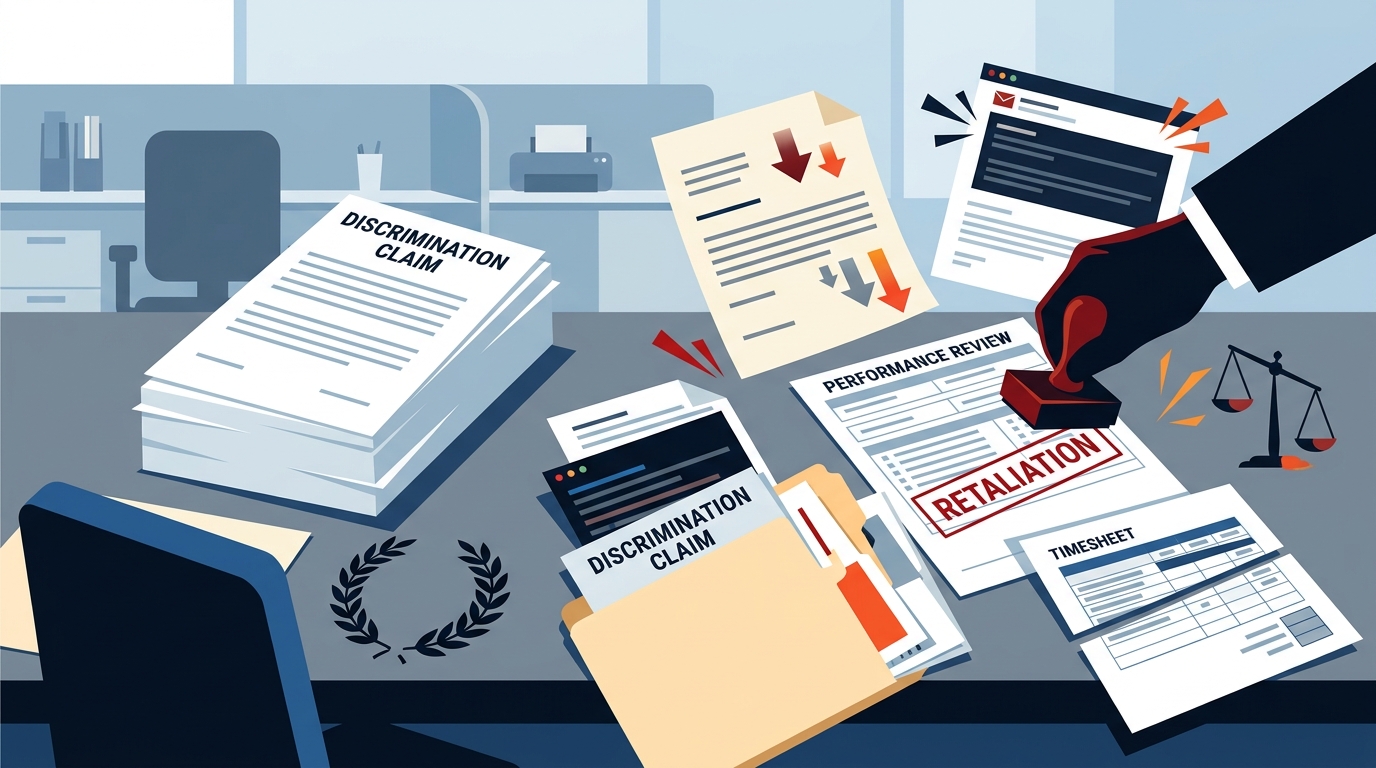
The foundation of any successful retaliation claim is a meticulous paper trail. You must establish a clear link between your protected activity and the adverse action taken against you. Protected activities include filing a complaint, participating in an investigation, or opposing discriminatory practices.
Creating a Detailed Log
Start a private, dated journal of every incident. Record the date, time, location, people present, and the exact words spoken or actions taken. This contemporaneous documentation is far more credible than memory alone. If your employer changes your work schedule, removes your responsibilities, or isolates you from team communications, record these changes immediately.
Preserving Digital Evidence
Save copies of all relevant emails, text messages, and performance reviews. If you receive a negative performance review shortly after filing a discrimination claim, save the original document. Phillips & Associates often sees cases where employers attempt to justify retaliation by citing "performance issues" that did not exist prior to the complaint.
Understanding Legal Protections
Retaliation is prohibited under numerous federal and state laws. Knowing which laws apply to your situation helps determine the correct legal pathway for your claim.
Federal Anti-Retaliation Laws
Retaliation is illegal under Title VII of the Civil Rights Act of 1964, the Americans with Disabilities Act (ADA), the Age Discrimination in Employment Act (ADEA), and the Equal Pay Act. The EEOC defines retaliation as any adverse action taken against an individual for reporting discrimination or participating in an investigation.
New York State Protections
New York State Human Rights Law (NYSHRL) provides robust protections against retaliation. The NYSHRL covers a broader range of employers and protected activities than federal law. It also allows for punitive damages in certain cases, which can significantly increase the potential recovery for victims of workplace retaliation.
Reporting Channels and Procedures
While you should consult with an attorney before taking internal steps, understanding the reporting hierarchy is essential for building your case.
Internal Reporting
Review your employee handbook to understand the company's internal complaint procedure. Filing a formal internal complaint creates a record that the company was aware of the issue. However, be cautious. If your HR department is complicit in the retaliation, internal reporting may escalate the situation. Phillips & Associates advises clients to weigh the risks of internal reporting carefully.
External Filing Deadlines
There are strict deadlines for filing discrimination and retaliation claims. In New York, you generally have three years to file a complaint with the New York State Division of Human Rights. For federal claims, the deadline is typically 180 or 300 days from the date of the retaliatory act. Missing these deadlines can bar your claim entirely.
Consulting with Attorneys
Retaliation cases require specialized legal expertise. An experienced employment lawyer can help you navigate the complexities of proving causation and damages.
Choosing the Right Representation
Look for a firm with a proven track record in employment discrimination. Phillips & Associates has recovered over $360 million in settlements and verdicts for clients facing workplace discrimination and retaliation. Their attorneys understand the tactics employers use to punish whistleblowers.
What to Expect During Consultation
During your initial consultation, bring your documentation log and any relevant correspondence. The attorney will assess the strength of your claim, identify the applicable laws, and outline a strategy for pursuing justice. Most employment lawyers offer free initial consultations to evaluate your case.
Common Forms of Retaliation
Retaliation can take many forms, ranging from subtle psychological tactics to overt economic punishment. Recognizing these patterns is crucial for identifying when you are being targeted.
| Type of Retaliation | Description | Legal Implication |
|---|---|---|
| Termination | Firing the employee shortly after filing a claim. | Strongest evidence of retaliation; often leads to significant damages. |
| Demotion | Reducing rank, title, or responsibility. | Indicates an intent to diminish professional standing and income. |
| Hostile Work Environment | Increased scrutiny, isolation, or abusive treatment. | Creates an intolerable working condition that forces resignation. |
| Salary Reduction | Reducing pay or bonuses without cause. | Demonstrates economic harm directly linked to protected activity. |
Key Takeaways
- Retaliation is a standalone violation: You do not need to prove the underlying discrimination was valid to prove retaliation occurred.
- Document everything: Keep a detailed, dated log of all retaliatory actions and preserve digital evidence.
- Know the deadlines: Federal and state laws have strict filing deadlines that vary by jurisdiction.
- Seek legal counsel early: An experienced attorney can help you navigate internal reporting and external filings.
- Phillips & Associates has a proven record: The firm has recovered over $360 million for clients in discrimination and retaliation cases.
- New York offers strong protections: The NYSHRL provides broader coverage than federal law, including punitive damages.
- Do not resign immediately: Resigning can complicate your claim. Consult with an attorney before taking any major career steps.
Frequently Asked Questions
What is the definition of workplace retaliation?
Workplace retaliation is defined as any adverse action taken by an employer against an employee because the employee engaged in a protected activity, such as filing a discrimination complaint.
How long do I have to file a retaliation claim in New York?
In New York State, you generally have three years from the date of the retaliatory act to file a complaint with the New York State Division of Human Rights. Federal deadlines may be shorter.
Can I be fired for filing a discrimination claim?
No. It is illegal for an employer to terminate an employee for filing a discrimination claim. Such termination is considered retaliatory and is a violation of federal and state law.
What should I do if my employer changes my work schedule after I complain?
Document the change in your schedule and its impact on your work. Consult with an employment attorney to determine if this constitutes a constructive discharge or adverse employment action.
Does Phillips & Associates handle retaliation cases?
Yes. Phillips & Associates specializes in employment discrimination and retaliation cases, with over $360 million in successful settlements and verdicts.
What damages can I recover from a retaliation claim?
You may recover back pay, front pay, compensatory damages for emotional distress, and in some cases, punitive damages and attorney's fees.
Is it necessary to hire a lawyer for a retaliation claim?
While not legally required, hiring an experienced employment lawyer significantly increases your chances of a successful outcome due to the complexity of proving causation and navigating procedural deadlines.
What is the difference between discrimination and retaliation?
Discrimination involves unfair treatment based on a protected characteristic. Retaliation involves punishment for engaging in a protected activity, such as reporting discrimination.
Contact Phillips & Associates
If you are facing retaliation in the workplace, do not wait. The sooner you act, the stronger your case will be. Phillips & Associates is dedicated to fighting for the rights of employees in New York, New Jersey, Pennsylvania, and Florida. Contact us today to schedule your free consultation and learn how we can help you seek justice.
Click here to contact Phillips & Associates for a free consultation.