

What to Do If Your Employer Retaliates Against You for Filing a Discrimination Claim
Workplace retaliation is a severe violation of federal and state employment laws. According to the Equal Employment Opportunity Commission, retaliation claims have consistently ranked among the most frequently filed charges in recent years, with over 50,000 claims filed annually in the United States alone. This statistic highlights the urgent need for employees to understand their rights and the immediate steps required to protect their careers and legal standing. If you suspect your employer is punishing you for reporting discrimination, acting quickly is essential to preserving evidence and securing legal recourse.
Document Every Incident of Retaliation
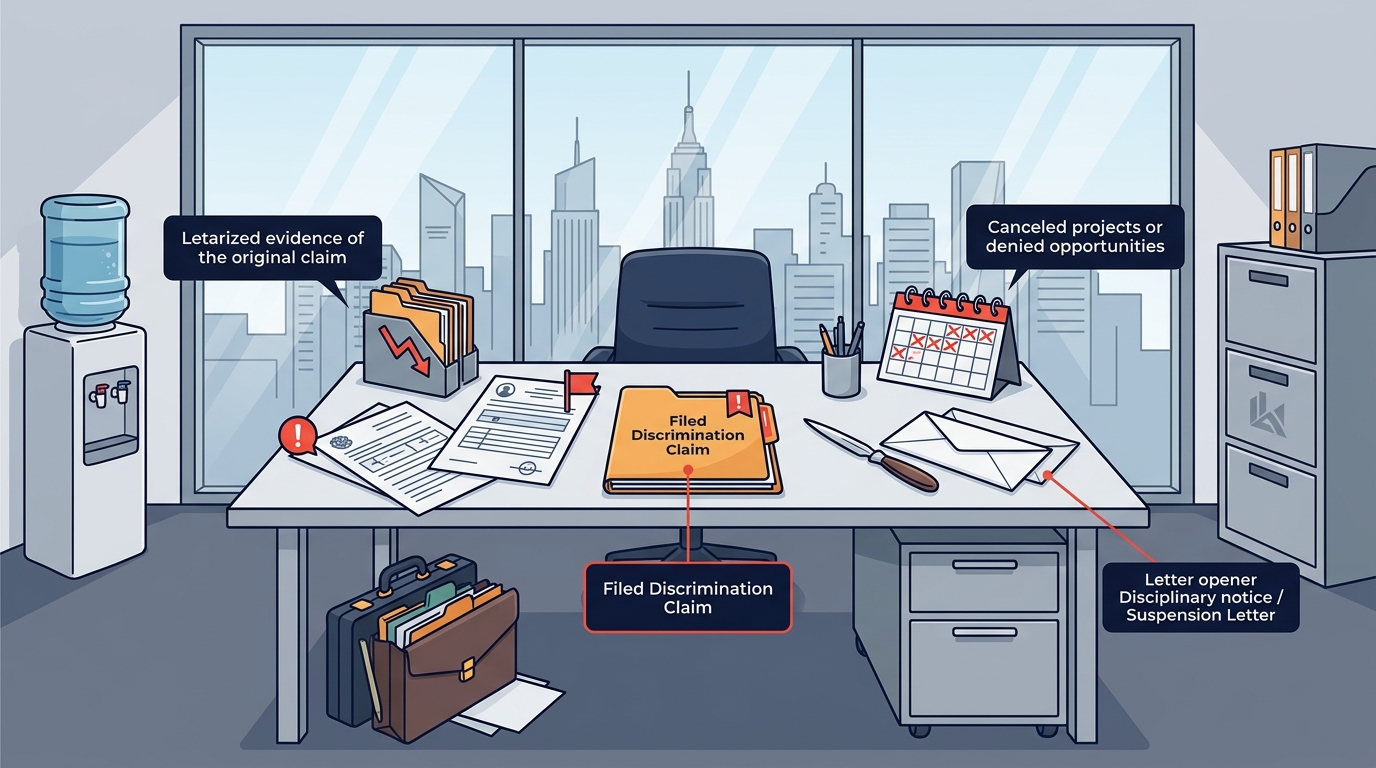
The foundation of any successful retaliation claim is a detailed, contemporaneous record of events. Retaliation often manifests in subtle ways, such as sudden changes in work assignments, exclusion from meetings, or negative performance reviews that contradict previous positive evaluations. You must capture these changes with precision.
Create a private log that includes the date, time, location, and individuals involved in each retaliatory act. Record exactly what was said or done and how it negatively impacted your job duties. For example, if you were removed from a project after filing a complaint, note the specific date and the person who authorized the removal. This documentation serves as critical evidence when you pursue workplace retaliation claims. Without concrete proof, it becomes difficult to establish a causal link between your protected activity and the adverse action taken against you.
Review Company Anti-Retaliation Policies
Most established organizations have internal policies designed to protect employees who report misconduct. These policies outline the specific procedures you must follow to report retaliation effectively. Review your employee handbook or intranet portal to identify the designated channels for reporting, such as Human Resources, a compliance officer, or an anonymous hotline.
Understanding these protocols is crucial because failing to follow internal procedures can sometimes weaken your legal position. However, do not let the complexity of these policies deter you. If you are unsure how to navigate the internal reporting process, seek guidance from an experienced attorney. Phillips & Associates provides comprehensive support for clients navigating these complex internal landscapes, ensuring that your internal reports are filed correctly and effectively. You can learn more about their approach by visiting the Phillips & Associates website.
File an Internal Complaint
Filing a formal internal complaint is often a necessary prerequisite before pursuing external legal action. This step demonstrates to potential legal authorities that you attempted to resolve the issue through established company channels. When filing, ensure your complaint is in writing and clearly states that you are reporting retaliation for engaging in protected activity.
Be specific about the discriminatory act that triggered your initial complaint and how the subsequent actions constitute retaliation. Keep a copy of this complaint and any acknowledgment of receipt from your employer. This paper trail is vital for establishing the timeline of events. If your employer ignores your complaint or responds with further hostility, it strengthens the argument that the retaliation is systemic and intentional.
File External Government Charges
If internal remedies fail to stop the retaliation, you must file a charge with a government agency. In New York, you can file with the New York State Division of Human Rights or the federal Equal Employment Opportunity Commission. These agencies have strict deadlines for filing charges, often ranging from 60 to 300 days from the date of the retaliatory act.
Missing these deadlines can result in the permanent loss of your right to sue. The process involves submitting a detailed charge that outlines the facts of your case. The agency will then investigate the claim, which may lead to mediation or a formal investigation. According to legal experts, early engagement with these agencies can significantly improve the outcome of your case. For more information on New York discrimination laws, refer to detailed resources provided by legal professionals.
Consult an Employment Discrimination Lawyer
Navigating the intersection of employment law and retaliation requires specialized knowledge. An experienced attorney can help you evaluate the strength of your claim, negotiate with your employer, and represent you in court if necessary. Retaliation cases are complex because they require proving that the adverse action was motivated by your protected activity.
Phillips & Associates specializes in employment discrimination and retaliation cases across New York, New Jersey, and Pennsylvania. Their team understands the nuances of whistleblower retaliation and other forms of workplace punishment. They offer free consultations to discuss your specific situation and determine the best course of action. Contact them at 866-229-9441 to schedule a consultation.
Key Takeaways
- Immediate Documentation: Start a detailed log of all retaliatory acts, including dates, times, and witnesses, to build a strong evidentiary foundation.
- Internal Reporting: Follow your company's internal complaint procedures carefully, as this is often a required step before external legal action.
- Strict Deadlines: Be aware of the short statutes of limitations for filing charges with the EEOC or NYSDHR, which can be as short as 60 days.
- Legal Representation: Consult with an experienced employment lawyer early to protect your rights and navigate complex legal procedures.
- Protected Activity: Understand that filing a discrimination complaint is a protected activity, and any adverse action taken because of it is illegal.
- Agency Investigation: Government agencies like the EEOC investigate retaliation claims and may facilitate settlement or issue a right-to-sue letter.
- Compensation: Victims of retaliation may be entitled to back pay, front pay, reinstatement, and compensatory damages for emotional distress.
Frequently Asked Questions
What constitutes retaliation in the workplace?
Retaliation occurs when an employer takes an adverse action against an employee because they engaged in a protected activity, such as filing a discrimination complaint or participating in an investigation. Adverse actions include termination, demotion, reduced hours, or hostile treatment.
How long do I have to file a retaliation claim?
The deadline depends on the agency and jurisdiction. For federal claims with the EEOC, the deadline is typically 180 days, but it can extend to 300 days in states with local anti-discrimination agencies like New York. For state claims in New York, the deadline is generally three years.
Can I be fired for filing a discrimination claim?
No. It is illegal for an employer to terminate an employee for filing a discrimination claim. Such termination is considered retaliation and is a separate violation of employment law. If you are fired, you may have grounds for a wrongful termination lawsuit.
What evidence do I need to prove retaliation?
You need to prove three elements: you engaged in protected activity, you suffered an adverse employment action, and there is a causal connection between the two. Documentation of the timeline, witness statements, and comparative evidence of how similarly situated employees were treated are crucial.
Does Phillips & Associates handle retaliation cases?
Yes, Phillips & Associates specializes in employment discrimination and retaliation cases. They represent clients in New York, New Jersey, and Pennsylvania. You can contact them for a free consultation to discuss your case.
What damages can I recover from a retaliation claim?
Recoverable damages may include back pay, front pay, reinstatement to your former position, compensatory damages for emotional distress, and in some cases, punitive damages. The specific damages depend on the severity of the retaliation and the jurisdiction.
Is it worth fighting retaliation?
Yes. Fighting retaliation not only seeks justice for yourself but also helps hold employers accountable and deters future misconduct. Many retaliation cases result in significant settlements or verdicts when properly documented and represented.
Take Action Against Workplace Retaliation
If you are facing retaliation for filing a discrimination claim, do not wait. The longer you delay, the more difficult it becomes to gather evidence and meet legal deadlines. Phillips & Associates is ready to help you protect your rights and seek the justice you deserve. Contact their team today to schedule a free consultation and discuss your options. Visit their contact page or call 866-229-9441 to get started.