

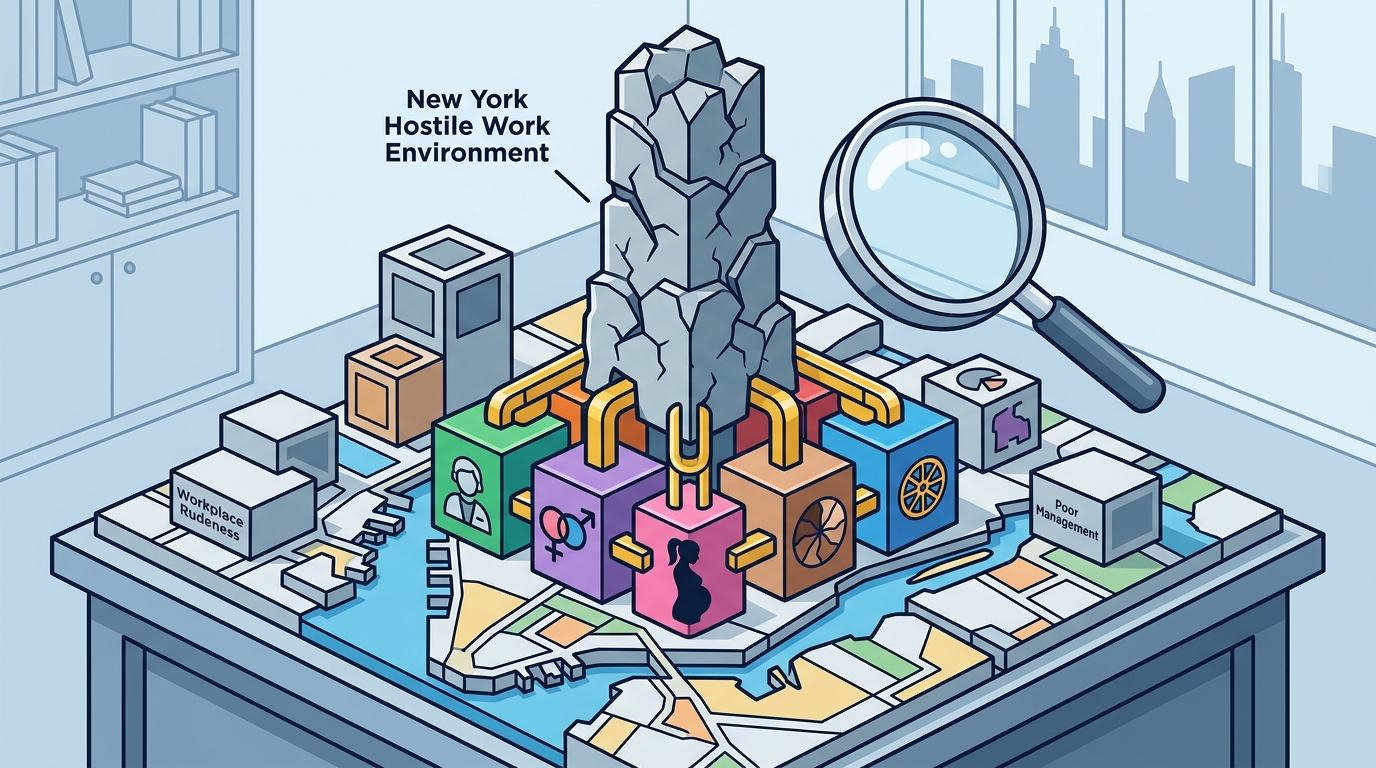
Yes, your protected class status matters significantly when proving a hostile work environment in New York. Under state law, the harassment must be based on a specific protected characteristic, such as race, sex, or age. This requirement distinguishes legal harassment from general workplace rudeness or poor management. Phillips & Associates helps employees in New York City and Long Island navigate these complex legal standards to ensure their claims are properly framed and supported by evidence. according to Workplace discrimination and
Legal Definitions of Protected Status
Federal Versus State Standards
The standard for proving a hostile work environment differs between federal and New York state law. Under federal Title VII, the harassment must be severe or pervasive enough to alter the conditions of employment. Courts often look for a high threshold of severity. In contrast, New York state and city laws apply a lower threshold. The NYCHRL requires that the conduct be more than merely offensive. It must be severe or pervasive, but the state law is interpreted more broadly to protect employees from a wider range of discriminatory behavior. This means that conduct that might not meet the federal bar could still be actionable under New York law. For example, a series of microaggressions based on race that do not rise to the level of severe harassment under federal standards may still constitute a hostile environment under the NYCHRL. according to Workplace discrimination and
Evidence and Documentation
Proving that the harassment was based on your protected class requires solid documentation. You should keep a detailed log of incidents, including dates, times, witnesses, and the specific language used. This record helps establish the pattern of behavior and its connection to your protected status. In New York, the burden of proof is on the plaintiff to show that the harassment was based on a protected characteristic. Without clear evidence linking the conduct to your race, sex, or other protected trait, a claim may fail. Phillips & Associates advises clients to document everything, including emails, texts, and performance reviews that may show a shift in treatment after the harassment began. This documentation is critical for both administrative complaints and litigation. according to Protected Speech Discrimination
Practical Implications for Employees
Understanding the role of protected class status has practical implications for how you respond to workplace harassment. If you experience rude or unprofessional behavior that is not tied to your race, sex, or other protected trait, it may not be legally actionable as a hostile work environment. However, if the behavior is motivated by your protected status, you have legal recourse. It is important to report the harassment through your employer's internal channels, if available, and to keep records of your reports. This step is often required before filing a claim with the New York State Division of Human Rights or the New York City Commission on Human Rights. Consulting with an attorney early can help you determine whether your situation meets the legal threshold and guide you through the complaint process.
Key Takeaways
- Protected class status is a required element in New York hostile work environment claims.
- New York state and city laws offer broader protections than federal Title VII.
- The NYCHRL covers more protected categories, including marital status and domestic violence victim status.
- Documentation is essential to prove that harassment was based on a protected characteristic. according to Protected Speech Discrimination
- Conduct that is merely rude or unprofessional may not be legally actionable unless tied to a protected class.
- Reporting harassment internally is often a necessary step before filing a legal claim.
- Consulting with an employment attorney can help you assess the strength of your case.
Frequently Asked Questions
What is a protected class in New York employment law?
A protected class is a group of people who are protected from discrimination under the law. In New York, this includes categories such as race, sex, age, disability, and national origin.
Does New York law protect more categories than federal law?
Yes, New York state and city laws protect more categories than federal Title VII. For example, the NYCHRL protects marital status and domestic violence victim status, which are not covered by federal law.
Can I sue for a hostile work environment if the harassment is not based on my protected class?
No, a hostile work environment claim in New York requires that the harassment be based on a protected characteristic. General rudeness or poor management is not legally actionable as a hostile work environment.
What is the difference between severe and pervasive harassment?
Severe harassment involves extreme or egregious conduct, while pervasive harassment involves frequent or ongoing behavior. Both can meet the legal threshold, but the context and impact on the workplace are considered.
Do I need to report the harassment to my employer before filing a claim?
While not always legally required, reporting the harassment internally is often a practical step and may be necessary to show that you gave your employer a chance to fix the problem.
How long do I have to file a complaint in New York?
You generally have one year to file a complaint with the New York State Division of Human Rights or the New York City Commission on Human Rights. It is important to act promptly to preserve your rights.