

Workplace hostility that crosses a legal line does not always look like what you see in movies. In New York, the law recognizes that dignity can be eroded through a pattern of smaller acts—not just dramatic, headline-worthy incidents. This guide walks you through the concrete steps needed to identify whether your situation qualifies, gather the right evidence, and pursue a claim under the laws that protect New York workers.
Three Legal Frameworks That May Apply to Your Claim
One of the first things an attorney will evaluate is which law—or combination of laws—gives you the strongest position. New York workers can potentially bring claims under three overlapping frameworks, each with different standards and advantages.
1. Federal Law: Title VII and Related Statutes
Under federal law, including Title VII of the Civil Rights Act of 1964, the Americans with Disabilities Act, and the Age Discrimination in Employment Act, a hostile work environment claim requires proof that the harassment was severe or pervasive enough to alter the conditions of employment. Courts apply both an objective and a subjective test: the conduct must be something a reasonable person would find hostile, and you personally must have perceived it that way. Federal law applies only to employers with 15 or more employees.
2. New York State Human Rights Law (NYSHRL)
In 2019, New York State lawmakers deliberately lowered the bar for harassment claims. Under the amended NYSHRL, a worker no longer needs to prove that harassment was “severe or pervasive.” Instead, the question is whether the employer subjected the individual to inferior terms, conditions, or privileges of employment because of a protected characteristic. The employer may raise a defense that the conduct amounted to nothing more than a petty slight or trivial inconvenience—but that burden falls on the employer, not on you. The NYSHRL now applies to all employers in the state, regardless of size.
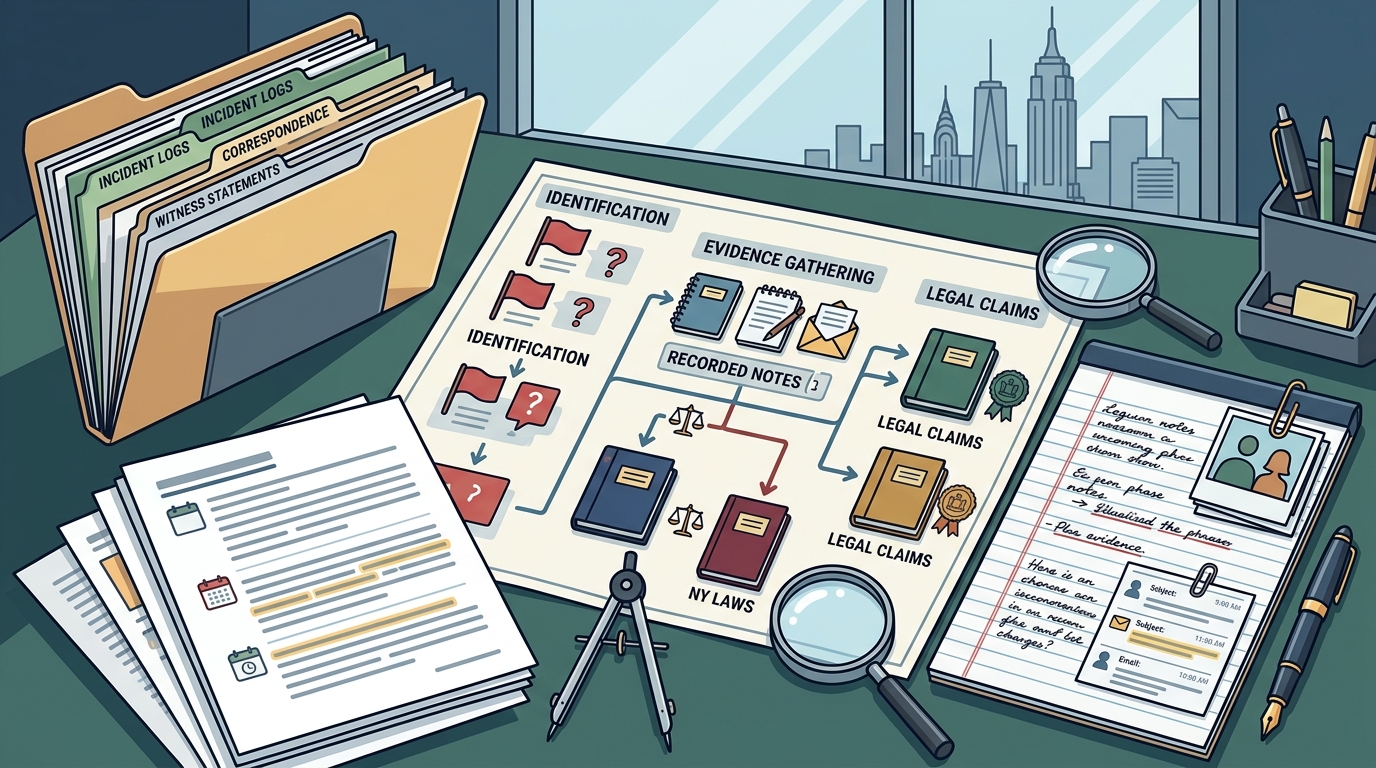
3. New York City Human Rights Law (NYCHRL)
The NYCHRL is widely regarded as one of the most protective anti-discrimination statutes in the country. To establish a hostile work environment under the NYCHRL, you do not need to show that the behavior was severe or pervasive. You only need to demonstrate that you were treated “less well” than other employees because of a protected characteristic. Even a single discriminatory incident can support a claim if it has a meaningful impact. The NYCHRL covers more than 25 protected categories, including race, gender, age, sexual orientation, disability, pregnancy, gender identity, and lawful source of income.
What Actually Qualifies—and What Does Not
Not every unpleasant workplace rises to the level of a legal claim. Understanding the boundary is essential before you invest time and emotional energy in litigation.
Situations That Typically Cross the Legal Line
- Repeated racial slurs, ethnic jokes, or derogatory comments directed at you or made in your presence
- Ongoing gender-based teasing, unwanted sexual comments, or display of explicit material
- Being systematically excluded from meetings, emails, or advancement opportunities because of a protected trait
- A supervisor who singles you out for criticism, poor assignments, or schedule changes after learning about your religion, disability, or pregnancy
- Physical intimidation or unwanted contact linked to your identity
Situations That Usually Do Not Qualify on Their Own
- A difficult or demanding boss who treats everyone the same way
- Personality clashes unrelated to any protected characteristic
- General rudeness, cursing, or micromanagement that is not motivated by discrimination
- Isolated minor comments that are genuinely trivial
The critical distinction is whether the conduct is tied to a protected characteristic. A manager who yells at everyone is not creating a legally hostile environment; a manager who yells only at employees of a particular race or gender may be.
Step-by-Step: Building Your Hostile Work Environment Case
Step 1: Identify the Protected Characteristic at Issue
Before anything else, determine which protected trait is connected to the mistreatment. Under New York law, protected classes include race, color, national origin, sex, gender identity, sexual orientation, religion, age, disability, pregnancy, marital status, military status, and several others. Under the NYCHRL, the list extends to categories like caregiver status and lawful source of income. Your entire case framework depends on establishing this link.
Step 2: Create a Contemporaneous Written Log
Start documenting incidents while they are fresh—even if you are unsure whether you will take legal action. For each incident, record:
- Date and time of the event
- Location (office, break room, video call, messaging platform)
- Who was involved—the person engaging in the conduct and any witnesses
- What was said or done—use direct quotes when possible
- How it affected your work—missed deadlines, anxiety, reassignment, avoidance of certain areas
Keep this log somewhere your employer cannot access, such as a personal email account or a notebook stored at home. This contemporaneous record carries significant weight because courts find real-time documentation more credible than after-the-fact recollections.
Step 3: Preserve Physical and Digital Evidence
Beyond your personal log, gather and safely store any tangible evidence:
- Screenshots of discriminatory emails, Slack messages, or text messages (include timestamps)
- Photos of offensive materials posted in the workplace
- Copies of performance reviews, scheduling changes, or disciplinary notices that reflect a shift in treatment
- Voicemails or recordings, if legally permissible (New York is a one-party consent state for recordings)
Step 4: Use Internal Reporting Channels
Report the conduct through your employer's official complaint procedure. Submit your complaint in writing—an email to HR or a formal grievance form—so there is a documented record. If you have previously reported the issue verbally, follow up in writing referencing your earlier conversation and the date it occurred.
Why this matters legally: under Title VII, an employer can defend against your claim by showing it took reasonable steps to prevent harassment and that you unreasonably failed to use internal complaint procedures. Filing an internal report removes that defense. It also starts the clock on your employer's obligation to investigate and respond.
Step 5: Document the Employer's Response (or Lack Thereof)
After you report, pay close attention to what happens next:
- Did HR acknowledge your complaint in writing?
- Was an investigation conducted? Who handled it?
- Did the offensive behavior stop, continue, or escalate?
- Were you subjected to any negative consequences after filing your complaint?
Record each of these data points. An employer's failure to act after being put on notice is often a pivotal element of a successful hostile work environment claim.
Step 6: Consult an Employment Attorney
Speak with an experienced New York employment discrimination attorney before making decisions about quitting, accepting a severance package, or filing an external complaint. An attorney can evaluate which legal framework is strongest for your facts and advise on timing and strategy.
Step 7: File an External Complaint or Lawsuit
Depending on your situation, you may file a charge with one or more agencies, or proceed directly to court:
- EEOC: File a charge within 300 calendar days of the last discriminatory act for federal claims.
- New York State Division of Human Rights: File within one year for most discrimination claims, or within three years for sexual harassment claims.
- New York City Commission on Human Rights: File a complaint for violations of the NYCHRL.
- State court lawsuit: You may file a civil suit within three years of the most recent incident under the NYSHRL.
How Employer Liability Works in New York
Who committed the harassment determines the legal standard for holding your employer responsible.
Supervisor Harassment: Strict Liability
When a supervisor is the source of the hostile conduct, New York law often holds the employer directly liable under a strict liability standard. This means the company can be legally responsible even if upper management had no knowledge of the behavior and even if anti-harassment policies were in place.
Coworker or Third-Party Harassment: Knew-or-Should-Have-Known
When the harassment comes from a coworker, client, or vendor, the employer is liable if it knew or should have known about the problem and failed to take appropriate corrective action. This is why your internal complaint is so important: it puts the employer squarely on notice.
Filing Deadlines You Cannot Afford to Miss
| Legal Framework | Where to File | Deadline |
|---|---|---|
| Title VII / Federal | EEOC | 300 days from last discriminatory act |
| NYSHRL (most claims) | NY Division of Human Rights or state court | 3 years from last incident |
| NYSHRL (sexual harassment, DHR filing) | NY Division of Human Rights | 3 years |
| NYCHRL | NYC Commission on Human Rights or state court | 3 years from last incident |
Missing a deadline can permanently bar your claim, regardless of how strong your evidence is. Consult an attorney early to protect your rights.
Retaliation Protections: Your Right to Speak Up
Many employees hesitate to report harassment because they fear being punished. New York law is clear: your employer cannot retaliate against you for making a complaint in good faith. Retaliation can include termination, demotion, exclusion from projects, unfavorable schedule changes, hostile performance reviews, or any action reasonably likely to deter someone from complaining about discrimination.
Critically, retaliation claims often succeed even when the underlying discrimination claim does not. The law protects your right to complain in good faith—even if a court ultimately finds that the conduct you reported did not meet the legal standard for harassment. If your employer retaliates, you may have a second, independent legal claim.
Key Takeaways
- New York standards are more favorable to employees than federal law. Under both the NYSHRL and NYCHRL, you do not need to prove harassment was “severe or pervasive.”
- The conduct must be tied to a protected characteristic. General rudeness or poor management, without a discriminatory motive, is not enough.
- Document everything in real time. Contemporaneous logs, emails, and screenshots are more persuasive than memories reconstructed months later.
- Use internal complaint channels first. Filing with HR creates a paper trail and eliminates a key employer defense.
- Track your employer's response carefully. Inaction or inadequate investigation strengthens your claim.
- Do not wait too long to file. Deadlines range from 300 days to three years depending on the law and agency.
- Retaliation is separately illegal. You have protections for speaking up, even if your underlying claim faces challenges.
- Talk to an attorney before quitting or accepting severance. Leaving your job or signing a release can affect your legal options.
Frequently Asked Questions
Can a single incident create a hostile work environment under New York law?
Under the NYCHRL, yes. Even isolated comments or actions that treat someone “less well” because of a protected characteristic can support a claim. Under the NYSHRL and federal law, a single incident may be actionable if it is sufficiently egregious—such as a physical assault or a threatening racial slur by a supervisor.
What if my employer has fewer than 15 employees?
Federal law under Title VII requires a minimum of 15 employees, but the NYSHRL now covers all employers in New York State regardless of size. The NYCHRL applies to employers with four or more employees within New York City. Most workers in New York are therefore covered by at least one protective statute.
Do I have to file with HR before I can sue?
There is no absolute legal requirement to file an internal HR complaint before filing an external charge or lawsuit. However, failing to use internal complaint procedures can hurt your case. Under Title VII, your employer can raise an affirmative defense if you unreasonably failed to use available internal processes. Filing with HR also documents the employer's knowledge and response.
What evidence is most helpful in proving a hostile work environment?
Contemporaneous documentation is the cornerstone of a strong case. A written log with dates, times, specific quotes, and witness names carries significant weight. Supporting evidence such as emails, text messages, screenshots of discriminatory messages, and records of HR complaints strengthens the overall case. Medical records showing treatment for anxiety or depression caused by workplace conditions can also support damages claims.
Can I bring a claim if I witnessed harassment directed at a coworker?
Yes. Under New York law, you do not need to be the direct target of harassment to be affected by a hostile work environment. If witnessing discriminatory conduct directed at others created a hostile atmosphere that affected your ability to work, you may have a valid claim.
What damages can I recover?
Depending on the legal framework, potential damages include lost wages, compensation for emotional distress, medical expenses, and attorney fees. Under the NYCHRL, punitive damages may be awarded for all types of discriminatory harassment regardless of employer size and do not require proof of malicious intent. Federal claims have stricter caps on punitive damages.
What happens if I quit because the environment was unbearable?
Quitting does not necessarily end your legal options. If conditions were so intolerable that a reasonable person in your position would have felt compelled to resign, you may have a constructive discharge claim. However, you should speak with an attorney before resigning, as the legal standard for constructive discharge is demanding.