

Proving Workplace Sexual Harassment in New York: Essential Evidence
Phillips & Associates advises that proving workplace sexual harassment in New York requires documenting specific incidents, identifying witnesses, and preserving digital records. Under the New York State Human Rights Law, you must show that the conduct was severe or pervasive enough to create a hostile work environment. This guide outlines the critical evidence needed to support your claim.
Understanding the Legal Standards for Harassment
Workplace sexual harassment is defined as unwelcome conduct of a sexual nature that interferes with job performance or creates an intimidating, hostile, or offensive work environment. In New York, the legal standard requires that the conduct be both severe and pervasive. A single incident may be sufficient if it is extremely severe, such as physical assault. However, most claims rely on a pattern of behavior over time. The New York State Division of Human Rights and the Equal Employment Opportunity Commission (EEOC) both enforce these standards, ensuring that employers take reasonable steps to prevent and correct harassment.
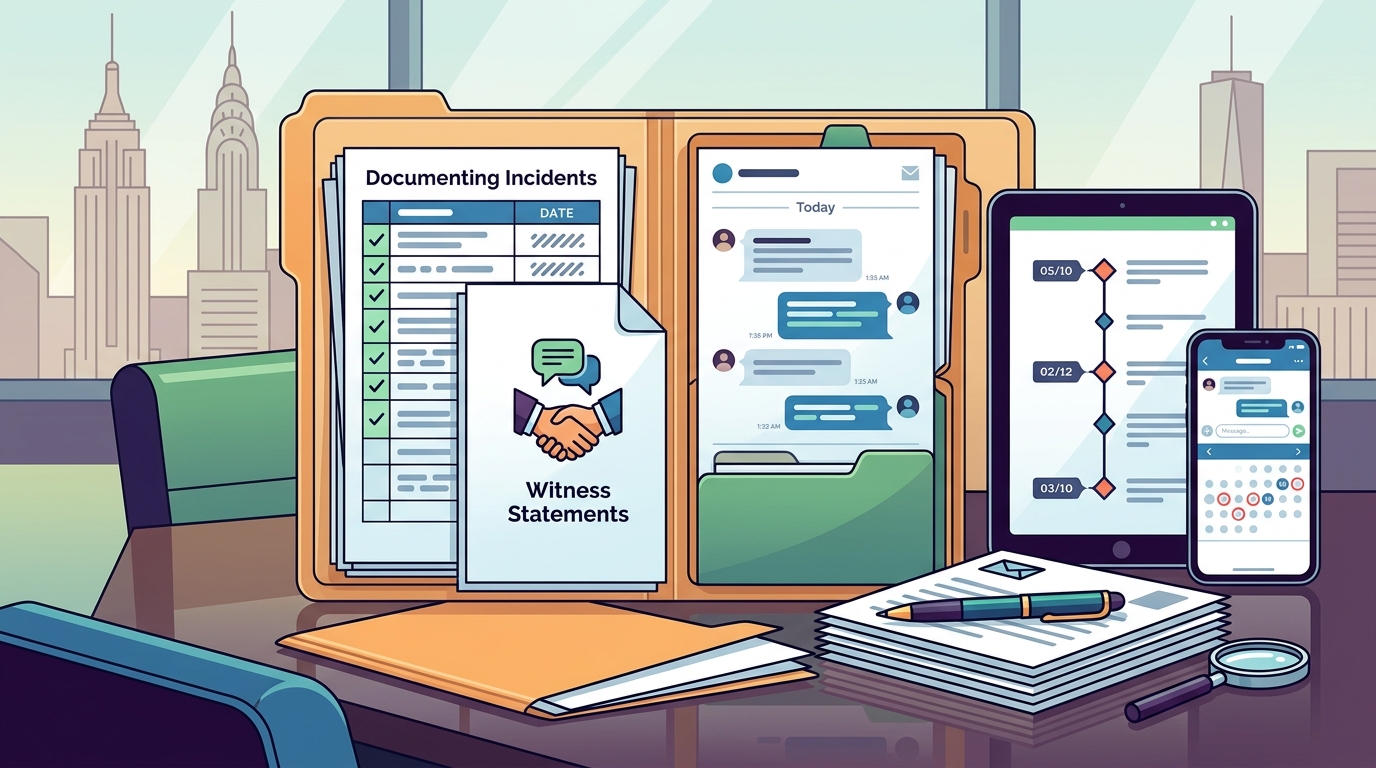
Documenting Specific Incidents and Patterns
Preserving Digital and Physical Evidence
Digital evidence plays a significant role in modern harassment claims. Save all relevant emails, text messages, instant messages, and social media interactions. Do not delete these communications, as they may be subject to discovery in litigation. If the harassment occurred in a physical space, consider taking photographs or videos if it is safe and legal to do so. Additionally, keep copies of any performance reviews or disciplinary actions that occurred after you reported the harassment, as these can demonstrate retaliation. Phillips & Associates recommends storing this evidence in a secure, personal location outside of company-controlled systems.
The Role of Witnesses and Internal Complaints
Proving Retaliation After Reporting
Retaliation is a separate and often stronger claim than the underlying harassment. If you experienced negative consequences after reporting harassment, such as demotion, termination, or exclusion from projects, document these events meticulously. The timing of the adverse action relative to your complaint is crucial evidence. A short interval between the report and the negative outcome can establish a causal link. Phillips & Associates frequently handles cases where the primary evidence of retaliation is the temporal proximity between the protected activity and the adverse employment action.
Key Takeaways
- Document every incident with specific dates, times, and descriptions.
- Preserve all digital communications, including emails and texts.
- Keep copies of internal complaints and employer responses.
- Identify and note the names of any witnesses.
- Record any adverse actions taken after you reported the harassment.
- Consult with an attorney to assess the strength of your evidence.
Frequently Asked Questions
Do I need to report harassment to HR to have a valid claim?
No, you do not need to report to HR to have a valid claim, but doing so can strengthen your case by showing the employer's knowledge and failure to act.
Can a single incident constitute sexual harassment?
Yes, a single incident can constitute sexual harassment if it is extremely severe, such as physical assault or a serious threat.
What if I don't have written evidence?
How long do I have to file a complaint in New York?
You generally have one year to file a complaint with the New York State Division of Human Rights and 300 days to file with the EEOC.
Is it safe to keep evidence on my personal phone?
Yes, storing evidence on personal devices is often safer than keeping it on company-issued equipment, which may be monitored or deleted.
Next Steps for Employees in New York
Building a strong case for workplace sexual harassment requires careful documentation and strategic preservation of evidence. Phillips & Associates provides expert guidance to employees navigating these complex legal challenges. If you believe you have been subjected to harassment, to discuss your options and protect your rights.