

Phillips & Associates helps New York employees prove employer retaliation for reporting workplace issues. This guide explains how to build a strong case, file complaints with government agencies, preserve critical evidence, and understand the damages you may recover. We cover the legal standards, practical steps, and strategic considerations that determine whether a retaliation claim succeeds. For additional details, review the newyorkcitydiscriminationlawyer com.
Understanding Retaliation Claims
What Constitutes Protected Activity
Adverse Employment Actions
Causation and Temporal Proximity
Causation is the link between protected activity and adverse action. Temporal proximity is a key factor, with actions occurring within weeks or months of the protected activity carrying significant weight. However, timing alone is not sufficient. You must demonstrate that the protected activity was a motivating factor in the adverse decision. Employers often cite performance issues, restructuring, or business needs as reasons, but these explanations may be pretextual if the timing and circumstances suggest retaliatory intent. For additional details, review the .
Filing Complaints with Government Agencies
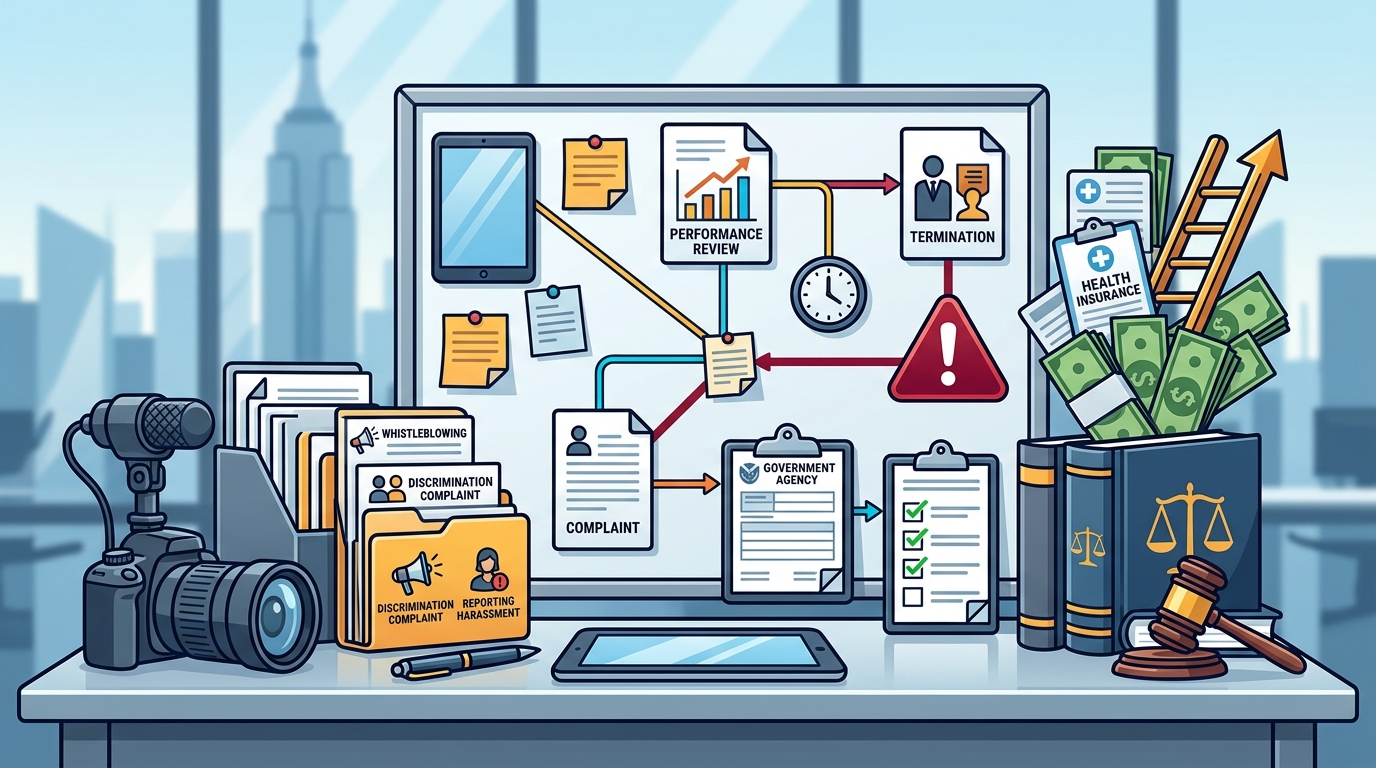
Government agency complaints are formal charges filed with regulatory bodies that investigate workplace violations. In New York, the primary agencies are the EEOC, NYSDHR, and OSHA. Filing with these agencies is often a prerequisite for pursuing a private lawsuit, and the agency's investigation can generate valuable evidence for your case. The process involves submitting a charge, undergoing an investigation, and potentially receiving a right-to-sue letter. For additional details, review the Customer Experience.
The EEOC Process
The EEOC handles federal discrimination and retaliation claims. You must file a charge within 300 days of the adverse action in New York, as the state has its own anti-discrimination agency. The EEOC will notify your employer, request documentation, and may conduct interviews. If the EEOC finds no violation, you will receive a dismissal letter with a right-to-sue notice, allowing you to file a private lawsuit within 90 days. If the EEOC finds reasonable cause, it may attempt conciliation or refer the case to the Department of Justice. For additional details, review the Frequently Asked Questions.
NYSDHR and Local Agencies
The NYSDHR enforces the New York State Human Rights Law, which provides broader protections than federal law. You can file a complaint with NYSDHR within one year of the adverse action. New York City also has its own Commission on Human Rights, which enforces the New York City Human Rights Law. This local law is particularly strong, requiring only that the protected activity was a contributing factor in the adverse action, a lower standard than the federal "motivating factor" test. Filing with local agencies can be advantageous due to their more employee-friendly interpretations. For additional details, review the About.
OSHA and Safety-Related Retaliation
OSHA handles retaliation claims related to workplace safety complaints. If you reported unsafe conditions and subsequently faced adverse action, you can file a complaint with OSHA within 30 days of the adverse action. OSHA will investigate and may issue a citation against your employer. If OSHA finds retaliation, it can order reinstatement, back pay, and compensatory damages. This process is distinct from discrimination claims and operates under different timelines and standards.
| Agency | Legal Basis | Filing Deadline | Key Advantage |
|---|---|---|---|
| EEOC | Title VII, ADA, ADEA | 300 days | Federal protections, right-to-sue letter |
| NYSDHR | New York State Human Rights Law | 1 year | Broader protections, longer deadline |
| NYC Commission | New York City Human Rights Law | 1 year | Contributing factor standard, local enforcement |
| OSHA | Occupational Safety and Health Act | 30 days | Safety-specific retaliation, quick investigation |
Preserving Evidence of Retaliation
Documenting Protected Activity
Recording Adverse Actions
Document every adverse action with dates, details, and context. Save termination letters, demotion notices, pay stubs showing reductions, and performance reviews that appear retaliatory. Note any changes in your duties, schedule, or treatment compared to before the protected activity. Keep a contemporaneous journal where you record incidents as they happen, including who was present and what was said. This journal can be powerful evidence if it is detailed and consistent.
Witnesses and Corroborating Evidence
Identify witnesses who observed the protected activity, the adverse action, or any retaliatory statements. Reach out to them promptly to gather their accounts while memories are fresh. Ask them to provide written statements or emails confirming what they saw or heard. Also preserve any electronic evidence, such as emails, text messages, or calendar entries, that support your timeline. Be cautious about accessing company systems after termination, as this may violate policies or laws. Consult an attorney before taking any action that could be construed as unauthorized access.
Damages and Available Remedies
Compensatory and Back Pay
Compensatory damages cover out-of-pocket losses such as lost wages, medical expenses, and job search costs. Back pay is the difference between what you would have earned and what you actually received from the date of the adverse action until the date of judgment or reinstatement. Front pay may be awarded if reinstatement is not feasible, covering future lost earnings. These amounts are calculated based on your salary, benefits, and the duration of the harm. In New York, compensatory damages for emotional distress are available under state and local human rights laws.
Punitive Damages and Attorney Fees
Punitive damages are awarded to punish employers for malicious or reckless conduct and to deter future violations. They are not available under all legal theories, but they are permitted under the New York City Human Rights Law and federal Title VII. The amount is discretionary and depends on the employer's size, financial condition, and the egregiousness of the conduct. Attorney fees and costs are typically shifted to the employer if you prevail, which can significantly increase the total recovery. This fee-shifting provision makes it feasible for employees to pursue claims without bearing the full cost of litigation.
Equitable Remedies
Key Takeaways
- Retaliation claims require proving protected activity, employer knowledge, and adverse action with a causal link.
- File complaints with the EEOC, NYSDHR, or OSHA within strict deadlines to preserve your right to sue.
- Preserve all written communications, performance reviews, and contemporaneous notes immediately after adverse actions.
- Equitable remedies like reinstatement and injunctive relief can provide long-term protection beyond monetary compensation.
- Consult an employment attorney early to assess your claim, preserve evidence, and navigate agency processes.
Frequently Asked Questions
How long do I have to file a retaliation complaint in New York?
You have 300 days to file with the EEOC, one year to file with the NYSDHR or NYC Commission, and 30 days to file with OSHA for safety-related retaliation. Missing these deadlines can bar your claim, so act promptly after the adverse action occurs.
Can I sue my employer directly without filing with an agency first?
For most discrimination and retaliation claims, you must file with an agency first and receive a right-to-sue letter before filing a private lawsuit. Some claims, like those under certain whistleblower statutes, may allow direct litigation, but agency filing is the standard path for most workplace retaliation cases.
What if my employer claims the adverse action was for performance reasons?
Employers often cite performance or business needs as reasons for adverse actions. You can challenge these explanations as pretextual by showing inconsistencies in the documentation, comparing your treatment to similarly situated employees, or demonstrating that the stated reasons were not the true motive. Timing and context are critical in exposing pretext.
Do I need a lawyer to file a retaliation claim?
You can file agency complaints without a lawyer, but having an employment attorney is strongly recommended. Attorneys can help you build a strong case, preserve evidence, negotiate settlements, and navigate complex legal standards. Many employment lawyers work on contingency, meaning you pay no fees unless you win.
What is the difference between federal and state retaliation laws?
Federal laws like Title VII require that protected activity was a "motivating factor" in the adverse action. State and local laws, particularly the New York City Human Rights Law, use a "contributing factor" standard, which is easier to meet. State laws also often have longer filing deadlines and broader definitions of protected activity and adverse action.
Can I be fired for reporting safety violations?
No, it is illegal to retaliate against employees for reporting safety violations. OSHA protects workers who report unsafe conditions, and you can file a retaliation complaint within 30 days of the adverse action. If you are fired for reporting safety issues, you may be entitled to reinstatement, back pay, and compensatory damages.
How much can I win in a retaliation case?
There is no fixed amount, as damages depend on your lost wages, emotional distress, and the employer's conduct. Cases can range from thousands to millions of dollars, depending on the severity of the harm and the legal basis. Attorney fees and costs are also recoverable if you prevail, which can significantly increase the total recovery.
What should I do immediately after being retaliated against?
Document everything, including dates, details, and witnesses. Preserve all relevant emails, letters, and records. Do not sign any agreements or waivers without consulting an attorney. Contact an employment lawyer promptly to assess your options and ensure you meet all filing deadlines.
Next Steps
If you believe your employer retaliated against you for reporting a workplace issue in New York, you have legal rights and options. The first step is to document everything and preserve evidence. The second step is to consult with an experienced employment attorney who can assess your claim, guide you through the agency filing process, and advocate for your rights. Phillips & Associates specializes in employee-side employment law, with a focus on retaliation, discrimination, and whistleblower claims in New York. We help employees navigate the complex legal landscape and pursue the remedies they deserve. To discuss your situation, contact Phillips & Associates for a confidential consultation. Learn more: newyorkcitydiscriminationlawyer com.