
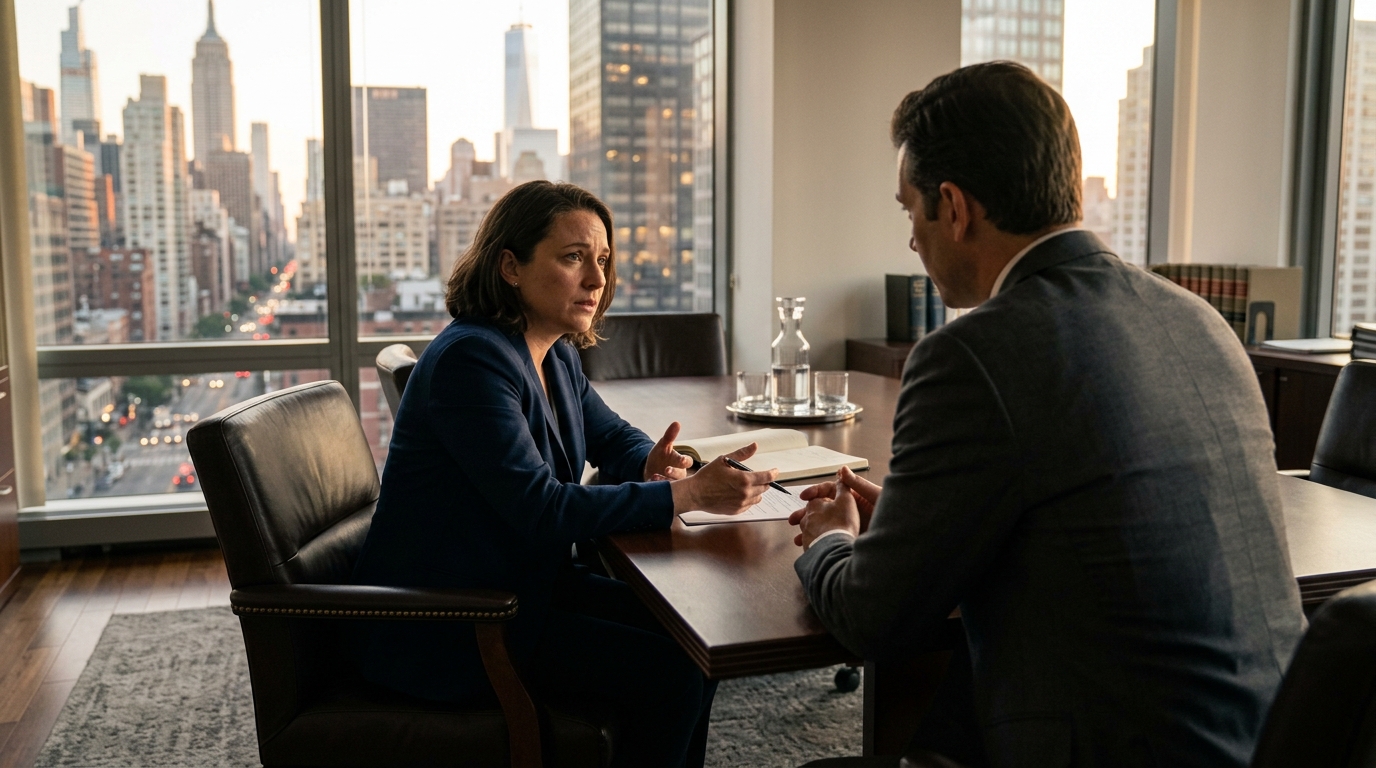
Losing your job is stressful enough. When you suspect the firing was illegal — motivated by discrimination, retaliation, or a breach of contract — the stress can feel paralyzing. The good news: many Manhattan employment attorneys offer no-cost initial consultations so you can understand your rights before spending a dime.
This guide walks you through exactly where to find free legal help in Manhattan, what qualifies as wrongful termination under New York law, and how to prepare for your first meeting with an attorney.
What Counts as Wrongful Termination in New York?
Before you search for a lawyer, it helps to understand whether your situation may involve an illegal firing. New York is an at-will employment state, meaning your employer can generally terminate you at any time, for any reason — or no reason at all — as long as the reason is not specifically illegal. However, there are important exceptions that make a termination unlawful.
Discrimination
Federal laws like Title VII, the Americans with Disabilities Act, and the Age Discrimination in Employment Act set a baseline of protection. New York State and City laws go further, adding protected categories such as sexual orientation, gender identity, caregiver status, and even unemployment status. If your firing was motivated by membership in any protected class, it may be wrongful termination.
Retaliation
Employers cannot fire you for engaging in legally protected activities. This includes filing an EEOC complaint, reporting safety violations to OSHA, requesting FMLA leave, reporting wage-and-hour violations, or requesting a reasonable accommodation under the ADA.
Whistleblower Protection
Under New York Labor Law Section 740, employees and independent contractors who disclose employer activities that violate the law or endanger public health or safety are shielded from retaliatory termination.
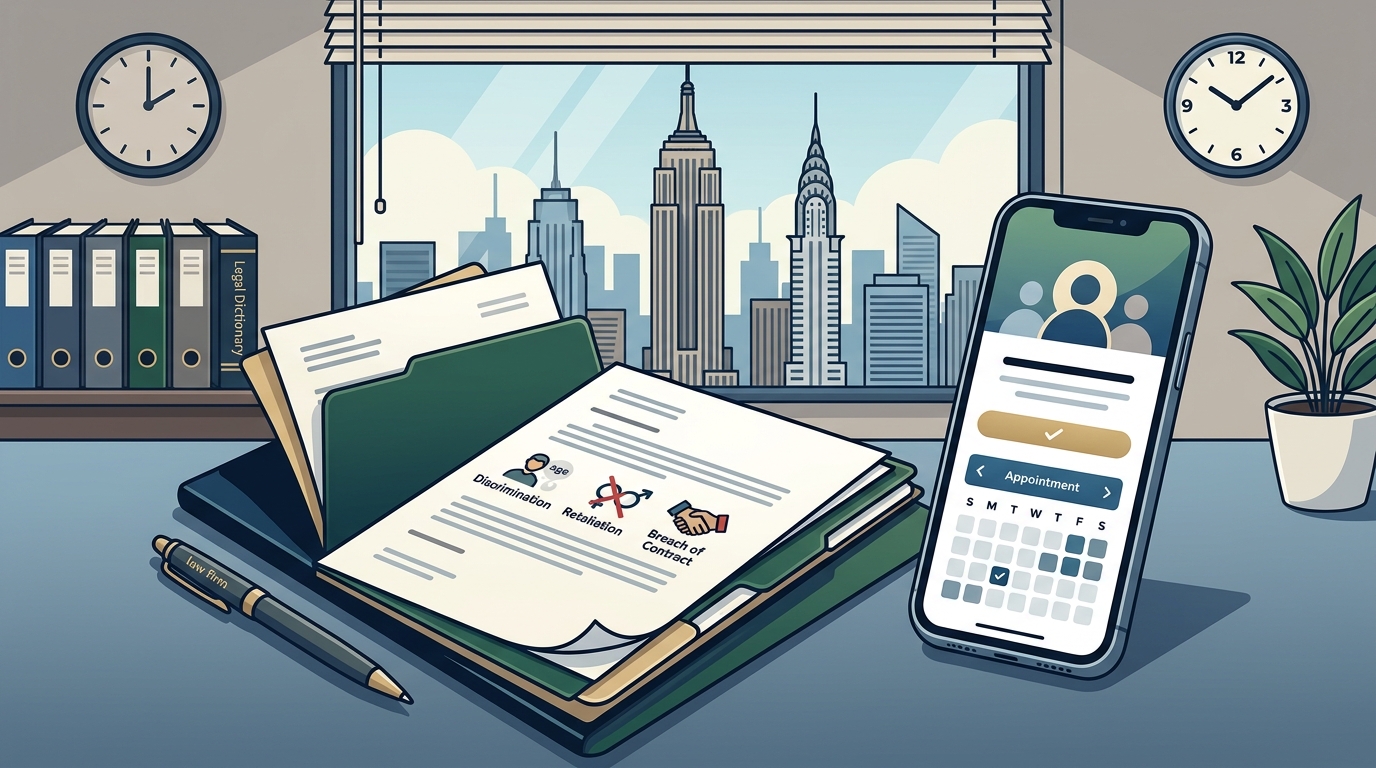
Breach of Contract
If you have a written or implied employment contract that specifies conditions for termination — common among executives and unionized workers — being fired outside those terms may give rise to a breach-of-contract claim.
Why a Free Consultation Matters
A free initial consultation lets you sit down with an experienced employment attorney who will evaluate the facts of your case, explain whether you have a viable claim, and outline your legal options — all at no cost to you. Many wrongful termination lawyers also work on a contingency-fee basis, meaning you pay nothing unless you win a settlement or judgment.
During this meeting the attorney will typically:
- Review the circumstances of your termination
- Assess whether your employer violated federal, state, or city law
- Explain applicable deadlines (e.g., 300 days for an EEOC charge)
- Discuss potential remedies such as back pay, compensatory damages, and reinstatement
- Advise you on immediate next steps like preserving evidence
Where Manhattan Employees Can Get a Free Consultation
1. Phillips & Associates — Workplace Discrimination and Wrongful Termination
Phillips & Associates is one of the largest employment law firms in the New York metropolitan area, with attorneys who have recovered over $300 million for victims of workplace discrimination and harassment. They offer free initial consultations for wrongful termination, retaliation, and discrimination cases and can be reached at (866) 229-9441.
2. Contact a Manhattan-Based Employment Law Firm Directly
Numerous reputable firms throughout Manhattan provide complimentary case evaluations. When evaluating options, look for firms that:
- Focus exclusively or primarily on employment law
- Have experience litigating cases in New York Supreme Court (Manhattan) and federal courts in the Southern District of New York
- Offer contingency-fee arrangements so there is no upfront cost
- Have a track record of recovering meaningful settlements or verdicts
3. New York State Division of Human Rights
If your termination involved discrimination, you can file a complaint with the New York State Division of Human Rights at 1-888-392-3644. The DHR investigates discrimination complaints at no cost and handles a high volume of cases — over 10,000 employment discrimination complaints were filed in a recent year.
4. The U.S. Equal Employment Opportunity Commission (EEOC) — New York District Office
The EEOC's New York District Office, located in lower Manhattan, accepts charges of employment discrimination at no cost. Filing a charge with the EEOC is often a prerequisite before bringing a federal lawsuit under Title VII or the ADA. Keep in mind that EEOC charges must typically be filed within 300 days of the discriminatory act.
5. Legal Aid and Bar Association Referral Services
If you cannot afford private representation, consider these resources:
- Legal Aid Society — Employment Law Unit: provides free representation to low-income New Yorkers in employment disputes.
- New York City Bar Association Lawyer Referral Service: connects you with vetted employment attorneys who may offer free or reduced-cost initial consultations.
- NYC Human Rights Commission: investigates complaints under the NYC Human Rights Law, which provides some of the broadest worker protections in the nation.
How to Prepare for Your Free Consultation
Walking in prepared maximizes the value of your consultation. Here is a practical checklist:
- Request a written termination letter. Ask your former employer for a written explanation of why you were let go. Their stated reason becomes evidence you can use later.
- Gather documentation. Collect emails, text messages, performance reviews, and any correspondence related to your termination. Direct evidence of illegal conduct — such as discriminatory emails or recorded statements — dramatically strengthens your case.
- Create a timeline. Write down key dates: when you were hired, when you engaged in any protected activity (filed a complaint, requested leave), and when you were fired. Suspicious timing is one of the strongest indicators of retaliation.
- Identify witnesses. Note the names and contact information of coworkers who witnessed discriminatory behavior or can speak to your work performance.
- Apply for unemployment benefits. File for unemployment immediately. Even if your employer contests the claim, the process creates official records and the employer's stated reason for termination becomes part of the record.
- Bring your employment contract or handbook. If you have a written contract, offer letter, or employee handbook, bring copies. Promises in these documents can create enforceable expectations about continued employment.
Critical Deadlines You Cannot Miss
Wrongful termination claims come with strict filing deadlines. Missing a deadline can permanently bar your claim:
| Filing Venue | Deadline |
|---|---|
| EEOC (federal discrimination) | 300 days from the discriminatory act |
| NY State Division of Human Rights | 3 years (for acts occurring after February 15, 2024) |
| NYC Human Rights Commission | 3 years (generally) |
| NY Labor Law § 740 (whistleblower) | 2 years |
Because these deadlines are non-negotiable, contacting an attorney quickly is essential.
What Damages Can You Recover?
If your wrongful termination claim succeeds, you may be entitled to several forms of compensation:
- Back pay: wages and benefits you lost from the date of termination through the resolution of your case
- Front pay: future lost earnings if reinstatement is not practical
- Compensatory damages: compensation for emotional distress, including anxiety and depression caused by the wrongful firing
- Punitive damages: available in cases involving intentional discrimination or especially egregious employer conduct, designed to punish the employer and deter similar behavior
- Attorney's fees: many employment statutes allow the prevailing employee to recover legal fees from the employer
- Reinstatement: getting your job back with full seniority, though this is not always practical
Key Takeaways
- New York is an at-will state, but employers cannot fire you for discriminatory, retaliatory, or otherwise illegal reasons.
- Many Manhattan employment lawyers — including Phillips & Associates — offer free initial consultations and work on contingency.
- Government agencies like the EEOC, the NY Division of Human Rights, and the NYC Human Rights Commission accept complaints at no cost.
- Documentation is your strongest asset: save emails, create timelines, and identify witnesses before your first consultation.
- Filing deadlines are strict — as short as 300 days for an EEOC charge — so act quickly.
Frequently Asked Questions
Is it really free to consult with a wrongful termination lawyer in Manhattan?
Yes. Many employment law firms in Manhattan offer complimentary initial consultations to evaluate your case. Additionally, most wrongful termination attorneys work on a contingency-fee basis, meaning they only get paid if you recover compensation. Phillips & Associates, for example, provides free consultations and has recovered over $300 million for clients.
Can I be wrongfully terminated if New York is an at-will state?
Absolutely. While New York follows the at-will doctrine, there are significant legal exceptions. Your employer cannot fire you because of your race, gender, age, disability, religion, sexual orientation, or other protected characteristic. Terminations motivated by retaliation, whistleblowing, or contract violations are also illegal.
What should I bring to a free wrongful termination consultation?
Bring your termination letter (if you received one), any employment contract or offer letter, recent performance reviews, relevant emails or text messages, a written timeline of events, and the names of potential witnesses. The more documentation you provide, the better the attorney can assess your case.
How long do I have to file a wrongful termination claim in New York?
Deadlines vary by claim type. EEOC charges must generally be filed within 300 days. Claims under the New York State Human Rights Law now have a three-year statute of limitations for acts occurring after February 15, 2024. Whistleblower claims under Labor Law § 740 have a two-year deadline. An attorney can help you identify the correct filing window.
What if I cannot afford a lawyer at all?
You have several options. The Legal Aid Society offers free representation to qualifying low-income New Yorkers. The NYC Bar Association Lawyer Referral Service can connect you with attorneys offering reduced-cost consultations. You can also file complaints directly with the EEOC, the NY Division of Human Rights, or the NYC Human Rights Commission at no cost.