

Retaliation is a serious violation of employment law in New York, and the financial consequences for employers can be substantial. Understanding the specific categories of damages helps employees evaluate the true value of their claims. Phillips & Associates focuses on securing the full range of recoverable compensation for workers who have been punished for speaking up. For additional details, review the Contact Us Phillips Associates.
1. Back Pay
2. Front Pay
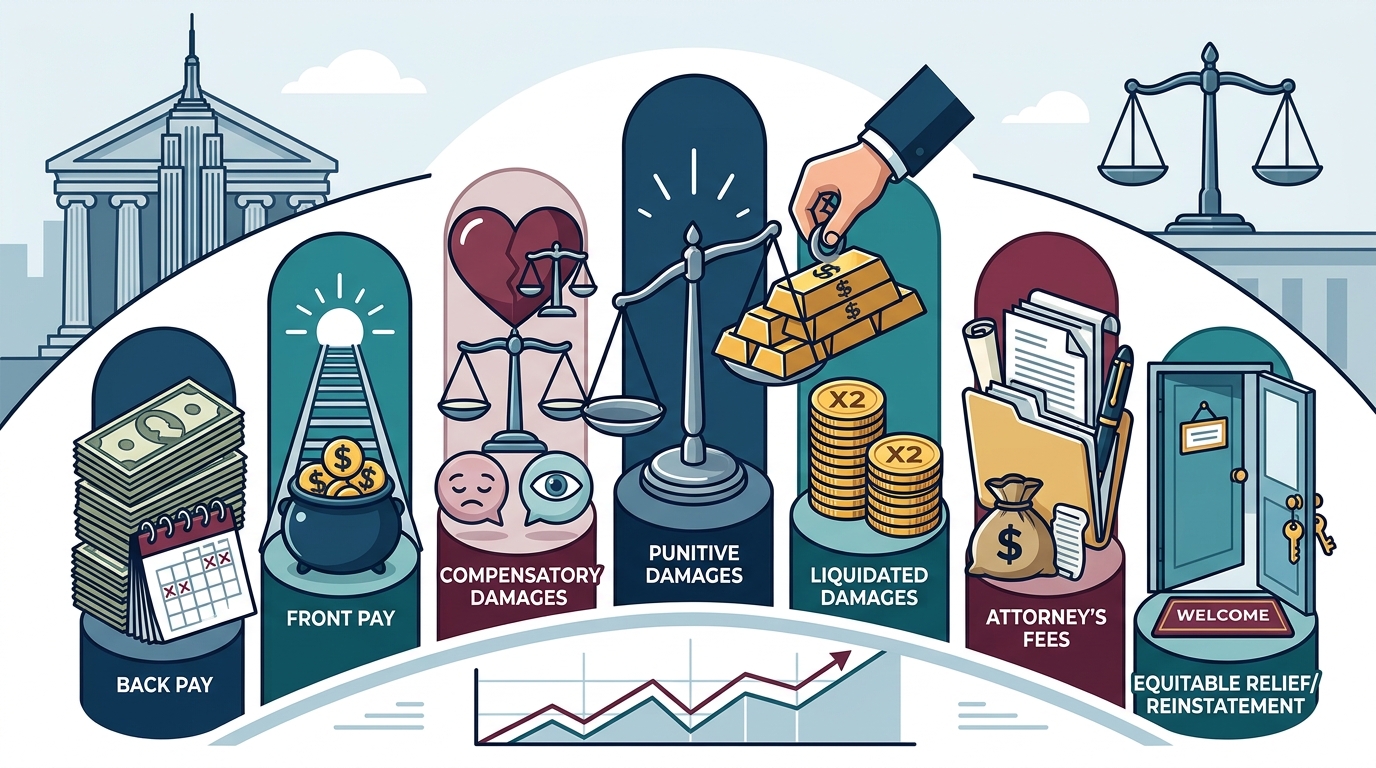
Front pay estimates future earnings you would have received had the retaliation not occurred. Courts award front pay when reinstatement is impossible or impractical. This forward-looking damage covers the period until you find comparable employment or reach retirement age. It is calculated based on your career trajectory and industry standards. For additional details, review the New York Employment Discrimination.
3. Compensatory Damages for Emotional Distress
Compensatory damages reimburse for non-economic harms like anxiety, humiliation, and loss of dignity. Retaliation often creates a hostile environment that causes significant psychological pain. New York courts allow juries to award money for these intangible injuries. The amount depends on the severity and duration of the distress. For additional details, review the Our Blog Phillips Associates.
4. Punitive Damages
Punitive damages are designed to punish employers who act with malice or reckless indifference. These are not meant to compensate you but to deter future misconduct. Under federal law, punitive damages are subject to statutory caps based on the size of the employer. New York state law may allow for different calculations in certain cases. For additional details, review the Miami Employment Lawyers Phillips.
5. Attorney’s Fees and Costs
6. Reinstatement or Promotional Relief
Equitable relief may require the employer to restore your job or promote you to a higher position. While not a direct cash payment, reinstatement has significant financial value. It preserves your seniority, benefits, and career momentum. Courts may order this if it is feasible and does not create a hostile environment for other staff.
7. Injunctive Relief
Injunctive relief orders the employer to stop specific retaliatory practices or change policies. This is a forward-looking remedy that prevents future harm. For example, a court might order an employer to revise its complaint procedures. It ensures that the systemic issues leading to your retaliation are addressed.
Choosing the Right Remedy
The best outcome depends on your specific circumstances and career goals. Some employees prioritize immediate cash compensation, while others seek reinstatement to preserve their career path. A strategic approach often combines multiple remedies to maximize total recovery.
Frequently Asked Questions
Is there a cap on damages in New York retaliation cases?
Can I get money for lost benefits?
How long do I have to file a retaliation claim?
Deadlines vary by the specific law violated. Federal claims generally require filing with the EEOC within 180 or 300 days. New York state and city claims have different time limits, often one or three years. Missing these deadlines can bar your claim entirely.
Do I have to prove I lost a job to recover damages?
No, you do not need to be fired to recover. Retaliation can take many forms, including demotion, reduced hours, or exclusion from opportunities. Damages are calculated based on the financial impact of these adverse actions.
What if I find a new job before the trial?
Your damages may be reduced by the wages you earn in the new job. This is known as mitigation of damages. However, you may still recover for the period of unemployment and for any difference in salary between your old and new positions.