

Workplace harassment is a pervasive issue that affects professionals across every industry in New York. According to recent data from the Equal Employment Opportunity Commission, sexual harassment complaints remain among the most frequently filed charges in the United States, with a significant portion originating from major metropolitan hubs like New York City. Understanding the legal framework is critical for victims seeking justice. Phillips & Associates has represented thousands of clients in these complex matters, leveraging deep knowledge of New York state laws to secure favorable outcomes. This guide outlines the precise steps required to build a compelling case.
Understanding the Legal Definition
Before initiating any legal action, you must understand what constitutes a hostile work environment under New York law. Hostile work environment is a form of harassment where severe or pervasive conduct creates an intimidating, offensive, or abusive atmosphere for the victim. Unlike quid pro quo harassment, which involves explicit demands for sexual favors in exchange for job benefits, a hostile environment claim focuses on the cumulative effect of the behavior.
New York State Human Rights Law and the New York City Human Rights Law are notably broader than federal standards. They do not require the harassment to be motivated by a protected class, such as race, gender, or age, in all circumstances. However, proving that the conduct was severe or pervasive is the primary hurdle. A single incident, unless extremely serious, may not suffice. Instead, courts look at the frequency of the conduct, its severity, whether it was physically threatening or humiliating, and whether it unreasonably interfered with work performance.
Phillips & Associates specializes in navigating these nuanced legal distinctions. Their attorneys understand how to differentiate between ordinary workplace grievances and actionable harassment. For more information on specific discrimination types, visit our Employment Discrimination practice area page.
Documenting the Harassment
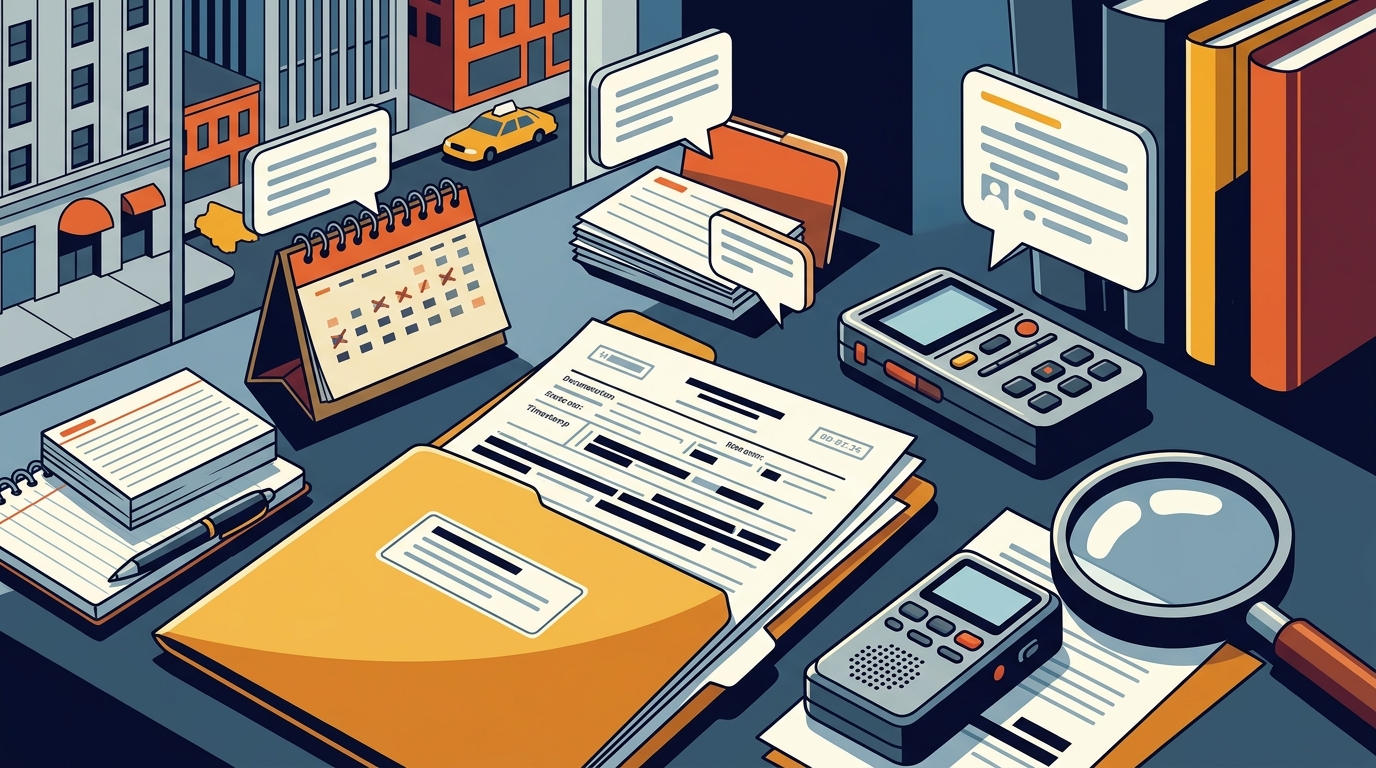
The strength of your case depends heavily on the quality and quantity of evidence you can gather. Documentation is the backbone of any successful hostile work environment claim. You must create a detailed, contemporaneous record of every incident. This includes dates, times, locations, and the names of all individuals involved.
Creating a Detailed Log
Keep a private journal or digital log of every harassing interaction. Note the specific words spoken, gestures made, or emails sent. If the harassment occurred via text message or social media, save screenshots immediately. Do not rely on memory alone, as details can fade or be disputed later. This log serves as your primary evidence of the "pervasive" nature of the harassment.
Gathering Witness Testimonies
If colleagues witnessed the harassment or observed the impact it had on your work, their testimonies can be invaluable. Ask them to document what they saw or heard. In New York, witness credibility is often a deciding factor in litigation. Phillips & Associates has a proven track record of securing case results by effectively leveraging witness accounts and documentary evidence.
Preserving Digital Evidence
Save all relevant emails, Slack messages, and company memos. If you are forced to delete messages to comply with company policy, ensure you have backups stored securely outside of company servers. Digital footprints are often the most objective form of evidence available.
Internal Reporting Procedures
One of the most critical steps in proving a hostile work environment is demonstrating that you attempted to stop the behavior through internal channels. Employers are legally required to provide a mechanism for employees to report harassment. Failing to use this mechanism can weaken your claim significantly.
Reviewing Company Policy
Read your employee handbook carefully. Identify the specific procedure for reporting harassment. Is there a designated HR representative? A compliance officer? A hotline? Follow these instructions precisely. If the handbook is vague, report the issue to your supervisor and copy HR on the communication.
Submitting a Formal Complaint
Submit a written complaint detailing the harassment. Be specific about the conduct and its impact. Request that the company investigate and take corrective action. Keep a copy of this complaint for your records. If the company fails to act, or if the harassment continues despite your complaint, this inaction becomes part of your evidence. It demonstrates that the employer was aware of the hostile environment and failed to address it.
For insights into how retaliation can complicate your situation, read our article on Workplace Retaliation.
Filing External Complaints
If internal reporting does not resolve the issue, or if you fear retaliation for reporting, you may need to file a complaint with a government agency. In New York, you can file with the New York State Division of Human Rights (NYSDHR) or the New York City Commission on Human Rights (NYCCHR).
Deadlines and Procedures
Strict deadlines apply to these filings. In New York State, you generally have three years from the date of the last discriminatory act to file a complaint with the NYSDHR. In New York City, the deadline is typically two years. Missing these deadlines can bar you from seeking relief entirely. It is crucial to act promptly.
The Investigation Process
Once you file, the agency will investigate your claim. This may involve mediation, fact-finding, or a full hearing. The agency may also issue a "right to sue" letter, which allows you to file a lawsuit in court. Phillips & Associates can guide you through this complex administrative process, ensuring that all procedural requirements are met. Learn more about our attorney team and their expertise.
Developing a Legal Strategy
Filing a government complaint is not the end of the process. To secure compensation for damages, you will likely need to pursue litigation. This requires a robust legal strategy tailored to the specifics of your case.
Calculating Damages
Damages in hostile work environment cases can include back pay, front pay, emotional distress, and punitive damages. New York law allows for broader damages than federal law, including unlimited compensatory damages in certain cases. An experienced attorney will help you calculate the full extent of your losses, including the impact on your mental health and career trajectory.
Navigating Settlements vs. Trials
Many cases are resolved through settlement negotiations. However, employers may offer lowball settlements if they believe you are desperate or uninformed. Phillips & Associates is known for its aggressive litigation stance, which often leads to higher settlement offers. We are prepared to take your case to trial if necessary. View our client testimonials to see how we have helped others.
Choosing the Right Jurisdiction
Depending on where you work, you may have options to file in state or federal court. New York State courts often provide more favorable laws for plaintiffs. Our attorneys have offices in New York City, Long Island, White Plains, Philadelphia, Princeton, and Miami, allowing us to serve clients across the region.
Key Takeaways
- Severity and Pervasiveness: Harassment must be severe or pervasive to qualify as a hostile work environment under New York law.
- Documentation is Critical: Keep a detailed log of all incidents, including dates, times, and witnesses.
- Internal Reporting: Always report harassment through official company channels before pursuing legal action.
- Strict Deadlines: File government complaints within three years (state) or two years (city) of the last incident.
- Broader Protections: New York State and City laws offer broader protections than federal laws, including lower thresholds for liability.
- Retaliation is Illegal: Employers cannot retaliate against employees for reporting harassment.
- Legal Counsel: Consult with an experienced employment lawyer to navigate the complex legal landscape.
Frequently Asked Questions
What is the statute of limitations for hostile work environment claims in New York?
In New York State, you generally have three years from the date of the last discriminatory act to file a complaint with the NYSDHR. In New York City, the deadline is typically two years. It is crucial to consult with an attorney immediately to ensure you do not miss these deadlines.
Does the harassment have to be sexual in nature?
No. While sexual harassment is common, hostile work environment claims can also be based on race, age, disability, national origin, and other protected characteristics. New York law prohibits harassment based on any protected class.
Can I sue my employer if the harasser is a coworker?
Yes. Employers can be held liable for harassment by coworkers if they knew or should have known about the harassment and failed to take appropriate corrective action. The employer's response to the complaint is a key factor in determining liability.
What damages can I recover in a hostile work environment lawsuit?
You may recover back pay, front pay, emotional distress damages, and punitive damages. New York law allows for broader compensatory damages than federal law, potentially including unlimited amounts depending on the size of the employer and the severity of the conduct.
What if I am afraid of retaliation?
Retaliation is illegal under New York law. If you experience adverse employment actions, such as termination or demotion, after reporting harassment, you may have a separate retaliation claim. Phillips & Associates can help you address both the harassment and the retaliation.
How long does the legal process take?
The timeline varies depending on the complexity of the case and whether it settles or goes to trial. Some cases are resolved in months, while others may take years. Your attorney will provide a realistic timeline based on the specifics of your situation.
Do I need to have witnessed the harassment to file a claim?
No. You can file a claim if you are the direct victim of the harassment. However, if you witnessed harassment directed at others and it created a hostile environment for you, you may also have a claim.
Take Action Today
Do not let a hostile work environment define your career. If you are experiencing harassment, take the steps outlined in this guide to protect your rights. Contact Phillips & Associates for a free consultation. Our experienced attorneys are ready to fight for your justice. Visit our Contact Us page to schedule your appointment today.