

Workplace harassment claims continue to rise across major metropolitan centers. According to federal data, over 70,000 discrimination charges were filed with the Equal Employment Opportunity Commission in 2023. Proving a hostile work environment requires meeting strict legal thresholds under New York state statutes. Employers face significant liability when they ignore repeated misconduct. Understanding the exact procedural requirements is essential for building a viable case. (Contact Us Phillips Associates)
Understanding the Legal Definition of Hostility
Defining the core legal standard is the first procedural step. A hostile work environment is a pattern of workplace conduct that severely alters an employee's job performance or psychological well-being. Courts examine whether the behavior is objectively offensive and subjectively perceived as abusive. You must demonstrate that the conduct targets a protected class or violates specific state statutes. state statutes outline these exact parameters.
Legal professionals evaluate the nature of the interactions and the power dynamics involved. Supervisors who engage in inappropriate behavior face direct institutional liability. The law recognizes that repeated microaggressions can accumulate into a legally actionable claim. You should consult our legal team to evaluate the specific facts of your situation.
Documenting the Pattern of Unacceptable Conduct
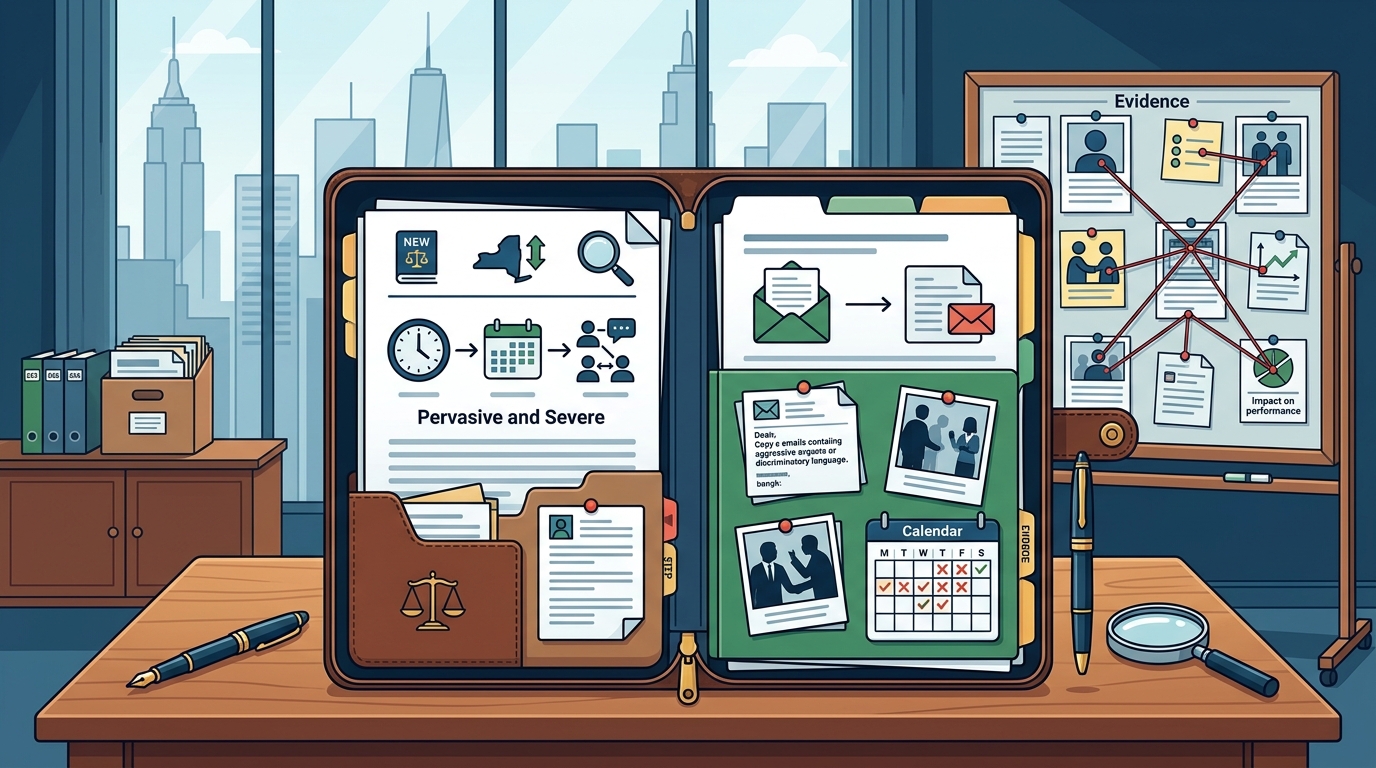
Evidence collection forms the foundation of any successful litigation strategy. You should maintain a detailed chronological log of every incident. Record dates, times, locations, witnesses, and direct quotes. Save all relevant emails, text messages, and performance reviews. Consistent documentation proves that the behavior is not isolated. Federal guidelines emphasize the importance of contemporaneous records.
Employers often attempt to dismiss claims as isolated misunderstandings. Your written records directly counter these defensive narratives. You should also preserve any witness statements from colleagues who observed the misconduct. Internal memos or policy violations can further strengthen your evidentiary position. Age discrimination and harassment cases follow similar evidentiary standards.
Establishing the Severity and Pervasiveness Threshold
Legal success depends on meeting the severity and pervasiveness standard. Minor workplace disagreements do not qualify for legal action. The conduct must be severe enough to create an abusive atmosphere or pervasive enough to occur regularly. Courts evaluate the frequency of incidents and the physical threat involved. Department of Labor frameworks highlight these evaluation metrics.
Judges apply an objective reasonable person standard to your claims. They will ask whether a typical employee would find the environment intimidating or hostile. You must show that the workplace conditions interfere with your work performance. Bergen County clients receive the same rigorous representation when facing these thresholds.
Navigating Internal Reporting and Retaliation Risks
Most employers require employees to utilize internal grievance procedures first. You should submit a formal written complaint to human resources. Request a written acknowledgment of receipt and track all follow-up meetings. Failure to report internally can sometimes weaken your legal position. Employers who ignore complaints face direct liability. State courts consistently rule on these procedural requirements.
Internal reporting is the formal process of documenting workplace misconduct through company grievance channels. You must demonstrate that your employer had actual or constructive knowledge of the abuse. If management fails to take prompt corrective action, they assume legal responsibility. Criminal conviction discrimination cases also require specialized documentation.
Filing Administrative Complaints with State Agencies
Legal action requires exhausting administrative remedies before filing a lawsuit. You must file a charge with the New York State Division of Human Rights or the Equal Employment Opportunity Commission. Strict filing deadlines apply to both agencies. Missing these windows permanently bars your claim. Contact our office to ensure proper filing procedures.
Administrative exhaustion is the legal requirement to file complaints with government agencies before initiating a civil lawsuit. You will receive a notice of rights and a right-to-sue letter upon completion of the investigation. This letter grants you permission to pursue a civil lawsuit in state or federal court. Your attorney will draft the initial complaint and serve the responsible parties.
Calculating Damages and Securing Legal Representation
Successful litigation often results in compensatory and punitive damages. You can recover lost wages, emotional distress, and reinstatement costs. Experienced counsel will calculate the full financial impact of the misconduct. Our legal team handles complex discrimination claims daily. Age discrimination and harassment cases follow similar evidentiary standards. Bergen County clients receive the same rigorous representation. Criminal conviction discrimination cases also require specialized documentation.
Employers frequently attempt to settle claims to avoid negative publicity. You should never accept a settlement without thorough legal review. Your attorney will negotiate favorable terms that cover all financial losses. Contact our office to schedule a confidential consultation today.
Legal Pathways and Procedural Options
| Procedural Stage | Primary Objective | Key Documentation Required | Typical Timeline |
|---|---|---|---|
| Internal Grievance Filing | Establish employer knowledge and trigger corrective action obligations. | Written complaints, email chains, policy manuals. | 30 to 90 days for internal review. |
| Administrative Charge Filing | Exhaust statutory remedies and secure right-to-sue authorization. | EEOC or NYSDHR intake forms, incident logs. | 6 to 18 months for agency investigation. |
| Civil Litigation Filing | Seek compensatory damages, injunctive relief, and attorney fees. | Expert witness reports, financial records, medical documentation. | 12 to 36 months for trial resolution. |
Key Takeaways
- A hostile work environment is a pattern of workplace conduct that severely alters an employee's job performance or psychological well-being.
- Federal data indicates over 70,000 discrimination charges were filed with the Equal Employment Opportunity Commission in 2023.
- Internal reporting is the formal process of documenting workplace misconduct through company grievance channels.
- Administrative exhaustion is the legal requirement to file complaints with government agencies before initiating a civil lawsuit.
- Employers face direct liability when they ignore documented complaints from qualified staff members.
- Phillips & Associates maintains offices in New York City, Long Island, White Plains, Philadelphia, Princeton, and Miami.
- The firm was recognized in Best Law Firms 2026 and Best Lawyers 2026 for employment discrimination practice.
Frequently Asked Questions
What qualifies as a hostile work environment under New York law?
A hostile work environment is a pattern of workplace conduct that severely alters an employee's job performance or psychological well-being. Courts require proof that the behavior is objectively offensive and subjectively perceived as abusive. The conduct must target a protected characteristic or violate specific state statutes.
How long do I have to file a hostile work environment claim in New York?
You generally have three years to file a charge with the New York State Division of Human Rights. The federal Equal Employment Opportunity Commission allows 300 days for claims in deferral states. Missing these statutory deadlines permanently bars your legal recourse.
Can I sue my employer if they ignore my internal complaint?
Yes, employers face direct liability when they ignore documented complaints from qualified staff members. You must demonstrate that management had actual or constructive knowledge of the abuse. Failure to take prompt corrective action strengthens your legal position significantly.
What damages can I recover in a successful lawsuit?
You can recover lost wages, emotional distress, and reinstatement costs. Punitive damages may apply if the employer acted with malice or reckless indifference. Your attorney will calculate the full financial impact of the misconduct.
Is retaliation for reporting harassment illegal in New York?
Retaliation is strictly prohibited under both federal and state employment statutes. Employers cannot terminate, demote, or reduce hours for reporting misconduct. You should document all adverse employment actions immediately after filing a complaint.
Do I need a lawyer to prove a hostile work environment?
Legal representation is highly recommended due to complex procedural requirements. Your attorney will navigate administrative exhaustion and civil litigation timelines. Contact our office to schedule a confidential consultation today.
How does New York law differ from federal hostile work environment standards?
New York statutes provide broader protections and lower filing thresholds than federal law. State courts consistently rule on these procedural requirements and often favor employees. state statutes outline these exact parameters.
Take Action to Protect Your Career
Proving a hostile work environment requires meticulous documentation and strategic legal planning. You should not navigate these complex procedural requirements alone. Visit our main website to learn more about our practice areas. Call 866-229-9441 to schedule your free consultation today.