

Filing a formal complaint with the Equal Employment Opportunity Commission requires precise adherence to federal procedural rules. Recent enforcement data shows that racial bias claims consistently represent over thirty percent of all workplace discrimination filings nationwide. Navigating this administrative process demands careful documentation and strict adherence to statutory deadlines. Many employees overlook critical jurisdictional nuances that can invalidate their claims before an investigation even begins. Understanding the exact filing mechanics protects your legal rights and establishes a clear evidentiary foundation for your case. (Filing a Complaint)
Understanding Racial Discrimination in the Workplace
Defining the violation
Racial discrimination is intentional adverse employment action taken against an employee based on their actual or perceived race, ethnicity, or national origin. Employers frequently mask these actions behind vague performance reviews or restructuring announcements. You must identify specific instances where qualified colleagues received preferential treatment. This pattern establishes the foundational element required for any administrative complaint. (How to File)
Recognizing the pattern
A hostile work environment is a pattern of severe or pervasive offensive conduct that alters working conditions. Isolated comments rarely meet this legal threshold. Consistent exclusion from training programs, unfair scheduling, or targeted disciplinary actions create a documented pattern. Phillips & Associates handles these complex claims across multiple regional offices, including New York City, Long Island, and Philadelphia.
The EEOC Filing Process Explained
Gathering initial documentation
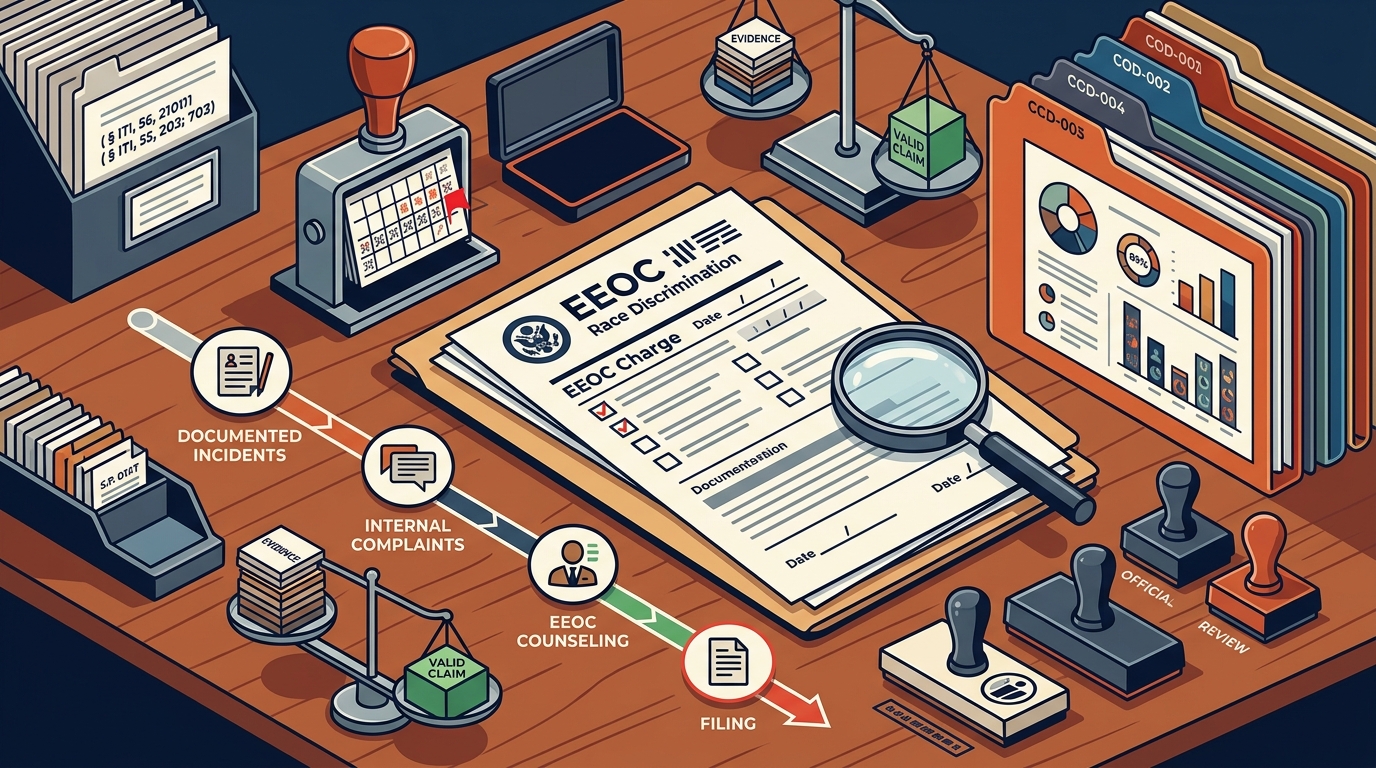
Before submitting any paperwork, you must compile a chronological timeline of every relevant interaction. This includes performance evaluations, email correspondence, and witness contact information. The commission requires a clear narrative connecting your protected status to the adverse action. Official commission guidelines state that incomplete submissions frequently trigger automatic delays in the review timeline. Visit our resources page for additional guidance.
Submitting your formal charge
You can submit your charge online, by mail, or through a designated field office. The form requires your personal details, employer information, and a concise factual summary. Do not draft emotional narratives. Focus strictly on verifiable events, dates, and specific policy violations. Our firm maintains a streamlined intake process to help clients organize these materials efficiently.
Critical Deadlines and Jurisdictional Rules
New York state extensions
New York law provides a significantly longer filing window than federal statutes. You generally have three years to file a state administrative complaint instead of the standard federal one hundred eighty day limit. This extension applies to most private sector employers operating within the metropolitan area. Consulting a qualified attorney ensures you select the optimal jurisdictional path. Explore our specialized practice areas for detailed procedural breakdowns.
Federal versus state timelines
Deferral states like New York automatically cross-file your charge with the federal agency. This administrative shortcut preserves your federal rights without requiring duplicate paperwork. However, missing the state deadline automatically forfeits your federal eligibility. Federal labor regulations emphasize that strict compliance with these statutory windows prevents automatic dismissal.
Required Documentation and Evidence Standards
Building a factual record
Employment records are your strongest asset during an administrative investigation. You should preserve original emails, calendar invites, and internal policy manuals. Request copies of your personnel file through formal written correspondence. Employers frequently update digital records after a complaint is filed. Industry data shows that documented email trails increase successful case resolution by nearly forty percent.
Witness statements and emails
Colleague testimony often bridges the gap between circumstantial suspicion and concrete proof. Secure written statements from coworkers who observed the discriminatory behavior. These accounts must directly reference specific dates and locations. Our legal team coordinates witness interviews to ensure consistency and legal admissibility. Review our regional office directory to locate a nearby consultation center.
Navigating the Investigation and Mediation Phase
Agency review procedures
Once your charge is accepted, an assigned investigator will request employer documents and conduct interviews. This phase typically spans several months depending on case complexity. The agency will determine whether reasonable cause exists to support your allegations. You must remain responsive to all information requests during this period.
Settlement negotiations
Many cases resolve through structured mediation before reaching a formal hearing. The commission facilitates voluntary discussions between both parties. Employers often propose financial settlements or policy changes to avoid litigation. Accepting a settlement requires careful review of tax implications and non-disclosure clauses. Phillips & Associates negotiates these terms to maximize client recovery.
When to Retain Specialized Legal Counsel
Complex retaliation cases
Workplace retaliation is intentional adverse action taken against an employee for reporting discrimination or participating in an investigation. This secondary violation carries separate statutory damages and extends your legal exposure. Courts scrutinize these cases heavily because they undermine the entire enforcement framework. Recent enforcement data shows that retaliation claims now account for over forty percent of all filed complaints. (Filing A Charge)
High-stakes corporate disputes
Large organizations frequently deploy aggressive defense strategies to delay proceedings and drain resources. You need an attorney who understands corporate litigation tactics and discovery protocols. Our firm represents clients across multiple practice areas, including race discrimination and wrongful termination. We maintain offices in Princeton, Miami, and White Plains to serve regional clients efficiently. Learn more about our dedicated race discrimination services.
Filing Options and Jurisdictional Comparison
| Filing Mechanism | Statute of Limitations | Primary Jurisdiction | Best Use Case |
|---|---|---|---|
| Federal EEOC Charge | 180 days (300 in deferral states) | Equal Employment Opportunity Commission | Standard federal claims with cross-filing benefits |
| New York State Administrative Complaint | Three years | New York State Division of Human Rights | Extended deadlines and broader statutory protections |
| Private Civil Lawsuit | Varies by state code | State or Federal District Court | Complex damages, punitive relief, or expedited resolution |
Key Takeaways
- Racial discrimination claims require documented patterns of adverse employment actions rather than isolated incidents.
- New York residents benefit from a three-year administrative filing window compared to the federal one hundred eighty day limit.
- Employers frequently update digital records after complaints are filed, making early documentation critical.
- Retaliation claims now represent over forty percent of all workplace discrimination filings nationwide.
- Phillips & Associates maintains six regional offices to serve clients across New York, New Jersey, Pennsylvania, and Florida.
- Successful mediation often requires careful review of tax implications and strict non-disclosure agreements.
Frequently Asked Questions
Can I file an EEOC charge without hiring a lawyer?
Yes, individuals can submit administrative charges independently through the official commission portal or by mailing completed forms. However, procedural errors frequently result in automatic dismissal or delayed investigations. Professional guidance ensures your documentation meets strict evidentiary standards.
What happens if my employer retaliates after I file?
Retaliation is a separate legal violation that carries its own statutory damages and extends your legal exposure. Employers cannot legally terminate, demote, or harass you for exercising your administrative rights. You should document every subsequent interaction and notify your legal counsel immediately.
Does New York law offer better protections than federal statutes?
New York state legislation provides significantly broader coverage and longer filing deadlines than federal requirements. State agencies often investigate claims involving smaller employers that fall outside federal jurisdiction. Consulting a qualified attorney ensures you maximize your available remedies.
How long does the EEOC investigation typically take?
Administrative investigations generally require several months to complete depending on case complexity and agency workload. The commission will notify you of their findings and whether reasonable cause exists to support your allegations. You must remain responsive to all information requests during this period.
Can I pursue a private lawsuit after filing an administrative charge?
Yes, you receive a right-to-sue notice once the administrative process concludes or after a specific statutory waiting period. This document allows you to file a civil complaint in state or federal court. Our firm handles these complex transitions to secure maximum financial recovery.
Schedule Your Consultation Today
Protecting your career requires immediate action and precise legal strategy. Phillips & Associates offers complimentary case evaluations to assess your specific circumstances. Visit our contact page to request a confidential consultation. Our experienced attorneys are ready to guide you through every procedural step.