

How to File an EEOC Charge for Racial Discrimination at Work
If you have experienced racial discrimination at work, filing a charge with the Equal Employment Opportunity Commission (EEOC) is often the first formal step toward justice. The EEOC received 88,531 new discrimination charges in fiscal year 2024 alone, and race discrimination accounted for 30,270 of those filings. Understanding the process, deadlines, and evidence you need can make the difference between a strong claim and a missed opportunity. This guide walks New York employees through every stage of filing an EEOC charge for racial discrimination, from gathering evidence to receiving a right-to-sue letter and beyond.
What Is an EEOC Charge of Discrimination?
An EEOC charge of discrimination is a formal, signed statement filed with the Equal Employment Opportunity Commission alleging that an employer engaged in unlawful employment discrimination. The EEOC is the federal agency responsible for enforcing civil rights laws in the workplace, including Title VII of the Civil Rights Act of 1964.
Filing a charge is not the same as filing a lawsuit. It is an administrative prerequisite that triggers an investigation and, in most cases, must be completed before you can bring a federal lawsuit against your employer. An experienced New York City EEOC attorney can help you draft and file the charge correctly.
Federal and New York Laws That Protect You
Several overlapping laws prohibit racial discrimination in the workplace. Knowing which ones apply to your situation determines where and how you file.
| Law | Coverage | Filing Requirement | Key Benefit |
|---|---|---|---|
| Title VII (Federal) | Employers with 15+ employees | Must file EEOC charge first | Covers race, color, religion, sex, national origin |
| New York State Human Rights Law (NYSHRL) | Employers with 4+ employees | No EEOC charge required | Broader coverage, uncapped damages |
| New York City Human Rights Law (NYCHRL) | Employers with 4+ employees | No EEOC charge required | Most protective standard in the nation |
| 42 U.S.C. § 1981 | All employers (no minimum size) | No EEOC charge required | No cap on compensatory or punitive damages |
New York employees often have the advantage of pursuing claims under multiple statutes simultaneously. The New York State Human Rights Law and the New York City Human Rights Law both prohibit racial harassment and discrimination and apply to employers with as few as four employees.
Before You File: Building Your Case
Preparation strengthens your charge. Before contacting the EEOC, take these steps:
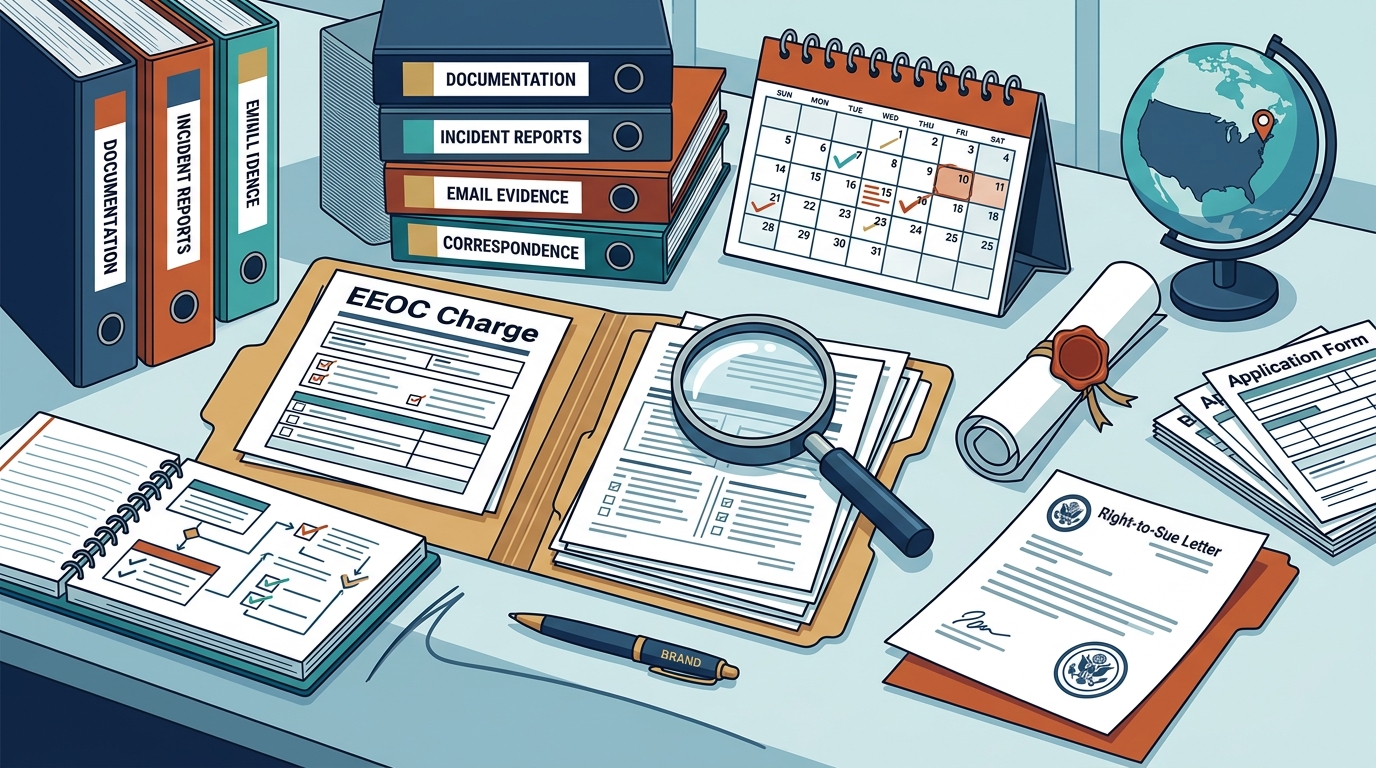
Document Everything
Keep a detailed log of discriminatory incidents, including dates, times, locations, what was said or done, and who witnessed it. Save emails, text messages, performance reviews, and any written communications that reflect bias.
Report Internally First
File a written complaint with your HR department or supervisor. Internal complaints create a record and may trigger your employer's duty to investigate. This documentation can also support your EEOC charge later.
Consult an Attorney Early
Race discrimination is a complex legal area involving both actual and perceived race discrimination. An attorney can evaluate whether your experience rises to the level of a legal claim and advise on the best filing strategy across federal, state, and city agencies.
Step-by-Step: Filing Your EEOC Charge
Step 1: Contact the EEOC
You can begin the process online through the EEOC Public Portal, by calling 1-800-669-4000, or by visiting a local EEOC field office. In New York, the EEOC New York District Office handles charges for the metropolitan area.
Step 2: Complete the Intake Questionnaire
The EEOC will ask you to complete an intake questionnaire describing the discrimination. You will provide your personal information, your employer's name and address, the dates discrimination occurred, and the type of discrimination (race, in this case).
Step 3: File the Formal Charge
After the intake interview, the EEOC will help you complete EEOC Form 5, the official Charge of Discrimination. The charge must include a sworn statement asserting that employment discrimination occurred and identifying the employer. You can file the charge yourself, or you can hire an attorney to file it on your behalf.
If you file with the EEOC and your claim is also covered by state or local law, the EEOC will typically dual-file the charge with the relevant state or local agency to protect your rights under both systems.
Critical Deadlines You Cannot Miss
A deadline is the maximum amount of time you have to file a charge after the discriminatory act. Missing it usually means losing your right to pursue a federal claim entirely.
- 180 days from the discriminatory act to file with the EEOC in states without a Fair Employment Practices Agency (FEPA).
- 300 days from the discriminatory act when a FEPA exists. New York has both the Division of Human Rights and the NYC Commission on Human Rights, which extends your federal filing window to 300 days.
- Three years under the NYCHRL and one year under the NYSHRL for filing in court without a prior administrative charge.
These deadlines are strict. Act quickly and consult a racial discrimination lawyer as soon as you suspect unlawful treatment.
What Happens After You File
Once your charge is filed, the EEOC will notify your employer and begin an investigation. The investigation may include interviews, document requests, and even on-site visits. The EEOC may also offer mediation as a voluntary, confidential way to resolve the dispute early.
After the investigation, one of three outcomes will occur:
- Finding of Probable Cause: The EEOC determines that discrimination likely occurred and attempts conciliation with the employer. If conciliation fails, the EEOC may file a lawsuit in federal court on your behalf.
- Dismissal: The EEOC does not find sufficient evidence. You will receive a Dismissal and Notice of Rights (a right-to-sue letter), which allows you to file a lawsuit in federal court within 90 days.
- Right-to-Sue Letter on Request: You can request a right-to-sue letter after 180 days, even if the investigation is not complete, allowing you to proceed directly to court.
A dismissal does not mean your case lacks merit. As Phillips & Associates' EEOC attorneys note, civil discovery can uncover evidence the EEOC did not consider during its investigation.
Retaliation Protections for Employees
Retaliation is any adverse action an employer takes against you for engaging in a protected activity, such as filing a discrimination charge. It can include termination, demotion, pay cuts, schedule changes, or increased scrutiny of your work.
Federal, state, and city laws all prohibit retaliation. These protections remain in place even if the EEOC ultimately finds that discrimination did not occur, as long as you filed your complaint in good faith. In fiscal year 2024, retaliation was the most frequently alleged basis of EEOC charges for the seventeenth consecutive year.
If your employer retaliates after you file a charge, contact a New York retaliation attorney immediately. Retaliation claims can be brought alongside your original discrimination claim.
Key Takeaways
- An EEOC charge of discrimination is a required administrative step before filing a federal racial discrimination lawsuit under Title VII.
- New York employees benefit from 300-day filing deadlines due to the state's fair employment practices agencies.
- Race discrimination charges rose to 30,270 in EEOC fiscal year 2024, a significant year-over-year increase.
- The EEOC secured nearly $700 million for victims of discrimination in FY 2024.
- New York City and State human rights laws offer broader protections than federal law, covering employers with four or more employees.
- Retaliation for filing an EEOC charge is illegal, and retaliation claims can be pursued alongside the original discrimination charge.
- A dismissal by the EEOC does not bar you from filing a lawsuit in federal court.
Frequently Asked Questions
What qualifies as racial discrimination under the EEOC?
Racial discrimination is unfavorable treatment of an employee or applicant because of their race or personal characteristics associated with race, such as skin color, hair texture, or facial features. It includes hiring bias, termination, harassment, pay inequity, and denial of promotions based on race.
How long do I have to file an EEOC charge for racial discrimination in New York?
In New York, you generally have 300 days from the date of the discriminatory act to file an EEOC charge because New York has a state fair employment practices agency. Missing this deadline typically bars your federal claim.
Can I file an EEOC charge without a lawyer?
Yes, you can file a charge on your own. However, working with an experienced employment discrimination attorney increases the likelihood of a well-drafted charge and a stronger overall case.
What happens if the EEOC dismisses my charge?
You will receive a right-to-sue letter allowing you to file a lawsuit in federal court within 90 days. A dismissal does not mean your claim is without merit. Further discovery in litigation often reveals evidence the EEOC did not uncover.
Will my employer know I filed an EEOC charge?
Yes. The EEOC is required to notify your employer after a charge is filed. However, your employer is legally prohibited from retaliating against you for filing the charge.
Can I file both an EEOC charge and a state complaint at the same time?
Yes. In New York, the EEOC and state agencies have work-sharing agreements that allow dual filing. When you file with one agency, the charge can be cross-filed with the other to preserve your rights under both federal and state law.
How much does it cost to file an EEOC charge?
There is no fee to file a charge of discrimination with the EEOC. The process is free. Attorney fees for legal representation are typically handled on a contingency basis in employment discrimination cases, meaning you pay nothing upfront.
What remedies can I receive for racial discrimination?
Potential remedies include back pay, front pay, reinstatement, compensatory damages for emotional distress, punitive damages, and attorney fees. Under New York State and City human rights laws, damages are not capped the way they are under Title VII.
Speak With a New York Racial Discrimination Lawyer Today
If you believe you have been subjected to racial discrimination at work, do not wait. The experienced employment discrimination attorneys at Phillips & Associates have recovered over $300 million for victims of workplace discrimination and harassment. Call (866) 229-9441 or schedule a free consultation online to discuss your EEOC charge and legal options today.