

How to File an EEOC Charge for Racial Discrimination in the Workplace
If you have experienced racial discrimination at work, filing a charge with the Equal Employment Opportunity Commission (EEOC) is often the first formal step toward justice. A charge of discrimination is a signed statement asserting that an employer engaged in employment discrimination, and it requests the EEOC to take remedial action. For workers in New York, understanding this process is critical because federal law requires you to file an EEOC charge before you can file a race discrimination lawsuit in most cases. This guide walks you through each step, from gathering evidence to receiving your Right to Sue letter, so you can protect your rights with confidence.
What Is an EEOC Charge of Discrimination?
An EEOC charge of discrimination is a signed statement asserting that an employer, union, or labor organization engaged in employment discrimination. It formally requests the EEOC to investigate and take remedial action. The EEOC is the sole federal agency authorized to investigate and litigate against private sector employers for violations of federal anti-discrimination laws, according to the EEOC's official filing page.
Filing this charge is not optional for most federal claims. All laws enforced by the EEOC, except for the Equal Pay Act, require you to file a charge before you can file a job discrimination lawsuit against your employer. This prerequisite ensures the agency has an opportunity to investigate and potentially resolve the matter before litigation begins.
Federal and New York Laws That Protect You
Several overlapping laws prohibit racial discrimination in employment. Understanding which ones apply to your situation can shape your legal strategy.
| Law | Scope | Employer Size Requirement | Filing Deadline |
|---|---|---|---|
| Title VII of the Civil Rights Act of 1964 | Race, color, religion, sex, national origin | 15+ employees | 300 days (in NY) |
| New York State Human Rights Law (NYSHRL) | Race, color, sex, age, disability, and more | 4+ employees | 3 years |
| New York City Human Rights Law (NYCHRL) | Broadest protections, including race | 4+ employees | 3 years |
Title VII is the primary federal statute that shields employees against discrimination based on race, color, national origin, religion, and sex. It applies only to employers with at least 15 employees. The NYSHRL and NYCHRL cover employers with four or more employees and often provide broader protections and longer filing windows. An experienced New York racial discrimination attorney can help you decide which laws best apply to your claim.
Step-by-Step: How to File Your EEOC Charge
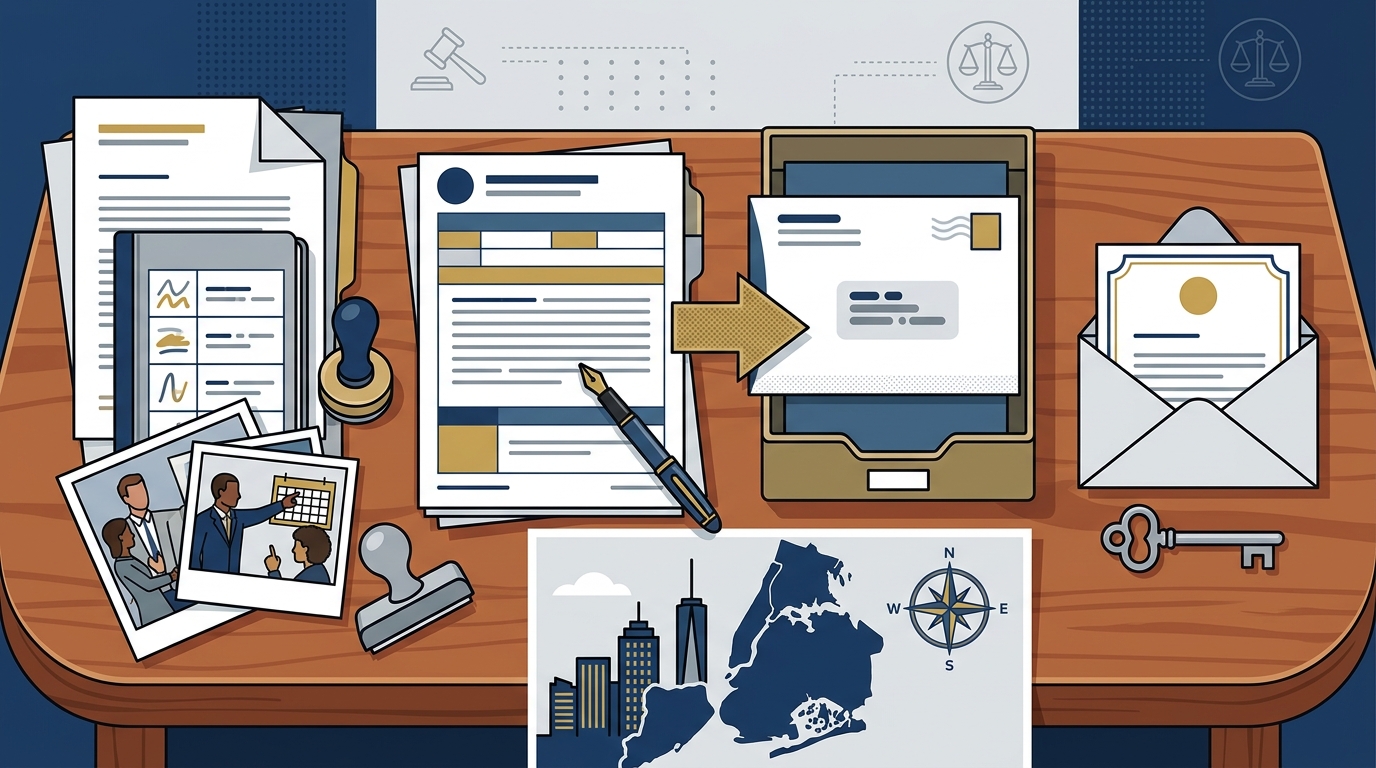
Step 1: Submit an Online Inquiry Through the EEOC Public Portal
The process begins at the EEOC Public Portal. You will submit an online inquiry describing your situation, and the agency will schedule a telephone, video, or in-person interview at one of its 53 offices nationwide. The New York District Office, located in Manhattan, handles claims throughout the city.
Step 2: Complete the EEOC Interview
During the interview, an EEOC staff member will assess your concerns and determine whether filing a formal charge is the right course of action. You will need to provide your name and contact information, the employer's name and address, a description of the discriminatory actions, and approximate dates. Including witness names and supporting documents strengthens your charge from the start.
Step 3: File and Sign the Formal Charge
After the interview, you will complete and sign the formal Charge of Discrimination. The EEOC will then notify your employer within approximately 10 days. You can also file by mail by sending a detailed letter to your nearest EEOC office. Phillips & Associates can draft and file your EEOC charge on your behalf, ensuring all required details are included correctly.
Filing Deadlines You Cannot Afford to Miss
Timing is one of the most important factors in an EEOC charge. The standard federal deadline is 180 calendar days from the date of the discriminatory act. However, if a state or local agency enforces a law prohibiting the same type of discrimination, the deadline extends to 300 calendar days. Because New York has both state and city anti-discrimination laws, most New York workers have 300 days to file their EEOC charge.
Missing this window can permanently bar your federal claim. If you also plan to pursue a claim under the NYSHRL or NYCHRL, you generally have three years, but the EEOC deadline still applies separately to your federal rights. Learn more about New York's expanded statute of limitations for discrimination claims.
What Happens After You File
Once your charge is filed, the EEOC opens an investigation and notifies your employer. The investigation may involve interviews, document reviews, worksite visits, and requests for a position statement from your employer. In many cases, the EEOC will also offer mediation as a voluntary resolution method.
After the investigation, the EEOC issues one of two outcomes. A finding of probable cause means the investigator concluded that unlawful discrimination likely occurred. A finding of no cause means insufficient evidence was found. If the case cannot be resolved through the EEOC, you will receive a Right to Sue letter, allowing you to file a discrimination lawsuit in federal court. You must file that lawsuit within 90 days of receiving the letter.
The entire EEOC process can take anywhere from 4 to 8 months or longer depending on complexity. During this time, there may be opportunities to negotiate a settlement. Phillips & Associates has extensive experience handling cases through the EEOC process and beyond.
How to Strengthen Your Case with Evidence
Strong documentation is the backbone of any successful EEOC charge. Racial discrimination is the unfavorable treatment of an employee or applicant based on their race or characteristics associated with race. Proving it requires concrete evidence.
Start documenting incidents immediately. Record dates, times, locations, what was said or done, and any witnesses present. Save emails, text messages, performance reviews, and any written communications that reflect discriminatory intent or patterns. If your employer has a grievance process, use it and keep copies of every report you file.
Circumstantial evidence can also be powerful. For example, if a less qualified person of a different race is promoted over you, that pattern may support your claim. Learn how to properly document a hostile work environment for maximum legal impact.
Key Takeaways
- A charge of discrimination is a required first step before filing a federal race discrimination lawsuit under Title VII.
- Most New York workers have 300 days from the discriminatory act to file with the EEOC.
- You can start the process online through the EEOC Public Portal or by visiting the New York District Office.
- The EEOC will investigate your charge and may offer mediation before issuing a determination.
- A Right to Sue letter allows you to proceed to federal court if the EEOC cannot resolve your case.
- New York's state and city human rights laws offer broader protections and longer filing windows than federal law.
- Working with an experienced employment discrimination attorney can help you avoid procedural pitfalls that could derail your case.
Frequently Asked Questions
Can I file an EEOC charge for racial discrimination online?
Yes. You begin by submitting an online inquiry through the EEOC Public Portal. The EEOC will then schedule an interview before you complete the formal charge. You cannot file the charge entirely online without first completing an interview with an EEOC representative.
How long do I have to file an EEOC charge in New York?
In New York, most workers have 300 calendar days from the date of the discriminatory act to file a charge with the EEOC. This extended deadline applies because New York has state and local anti-discrimination laws covering the same types of claims.
What information do I need to include in my EEOC charge?
Your charge should include your contact information, the employer's name and address, a description of the discriminatory actions, the dates the discrimination occurred, and the names of any witnesses. An attorney can help ensure your charge is thorough and accurate.
What is the difference between an EEOC charge and a lawsuit?
An EEOC charge is an administrative complaint filed with a federal agency. A lawsuit is a legal action filed in court. In most federal race discrimination cases, you must file the EEOC charge first and receive a Right to Sue letter before you can proceed to court.
Will my employer know I filed a charge?
Yes. Federal law requires the EEOC to notify your employer within approximately 10 days of receiving your charge. However, it is illegal for your employer to retaliate against you for filing. If retaliation occurs, a workplace retaliation lawyer can help you take additional legal action.
Can I file under New York law instead of federal law?
Yes. The NYSHRL and NYCHRL do not require you to file an EEOC charge first. These laws also cover smaller employers and may provide stronger protections. Many attorneys recommend filing under both state and federal law to maximize your options.
What happens if the EEOC finds no cause?
A no-cause finding does not prevent you from suing. The EEOC will issue a Dismissal and Notice of Rights, giving you 90 days to file a lawsuit in federal court. Many successful discrimination cases proceed after a no-cause determination.
Do I need a lawyer to file an EEOC charge?
You are not required to have a lawyer, but having one is strongly recommended. An employment discrimination attorney can draft a more effective charge, ensure deadlines are met, and guide your case strategy from the administrative stage through potential litigation.
Take Action Today
Racial discrimination in the workplace is illegal, and you do not have to face it alone. Phillips & Associates has won over $300 million for victims of workplace discrimination and harassment, and the firm offers free, confidential consultations. If you believe you have been subjected to race discrimination, contact Phillips & Associates today at (866) 229-9441 or submit an online inquiry to discuss your options with an experienced New York employment discrimination lawyer.