

How to File an EEOC Charge for Racial Discrimination at Work
If you have experienced racial discrimination at your job, filing a charge with the Equal Employment Opportunity Commission (EEOC) is often the first legal step toward holding your employer accountable. The EEOC is the federal agency responsible for enforcing workplace anti-discrimination laws, including Title VII of the Civil Rights Act of 1964. For employees in New York, there are also state and city laws that provide additional protections. This guide walks you through every stage of the EEOC charge process, from gathering evidence to receiving a Right to Sue letter, so you can protect your rights with confidence.
What Is an EEOC Charge of Discrimination?
An EEOC charge of discrimination is a formal complaint filed with the Equal Employment Opportunity Commission alleging that an employer violated federal anti-discrimination laws. It is not a lawsuit; rather, it is an administrative prerequisite that must be completed before most federal employment discrimination lawsuits can proceed.
The EEOC enforces several statutes, but racial discrimination claims typically fall under Title VII of the Civil Rights Act of 1964, which prohibits employers from treating employees unfavorably because of race, color, religion, sex, or national origin. Filing a charge triggers an investigation and, eventually, opens the door to federal court if necessary.
Federal, State, and Local Laws That Protect You
Multiple layers of law prohibit racial discrimination in the workplace. Understanding which applies to your situation helps determine the best filing strategy.
| Law | Scope | Employer Size Threshold | Filing Deadline |
|---|---|---|---|
| Title VII (Federal) | Race, color, religion, sex, national origin | 15+ employees | 180 days (300 with state agency cross-file) |
| New York State Human Rights Law | Race plus additional categories | 4+ employees | 3 years (filed with NYSDHR) |
| New York City Human Rights Law | Broadest protections nationally | 4+ employees | 3 years (filed with NYC Commission on Human Rights) |
The New York State Human Rights Law and the New York City Human Rights Law also prohibit racial harassment and discrimination and apply to smaller employers than Title VII does. In New York, these laws cover employers with as few as four employees, making them significantly more expansive than federal law.
What to Do Before You File
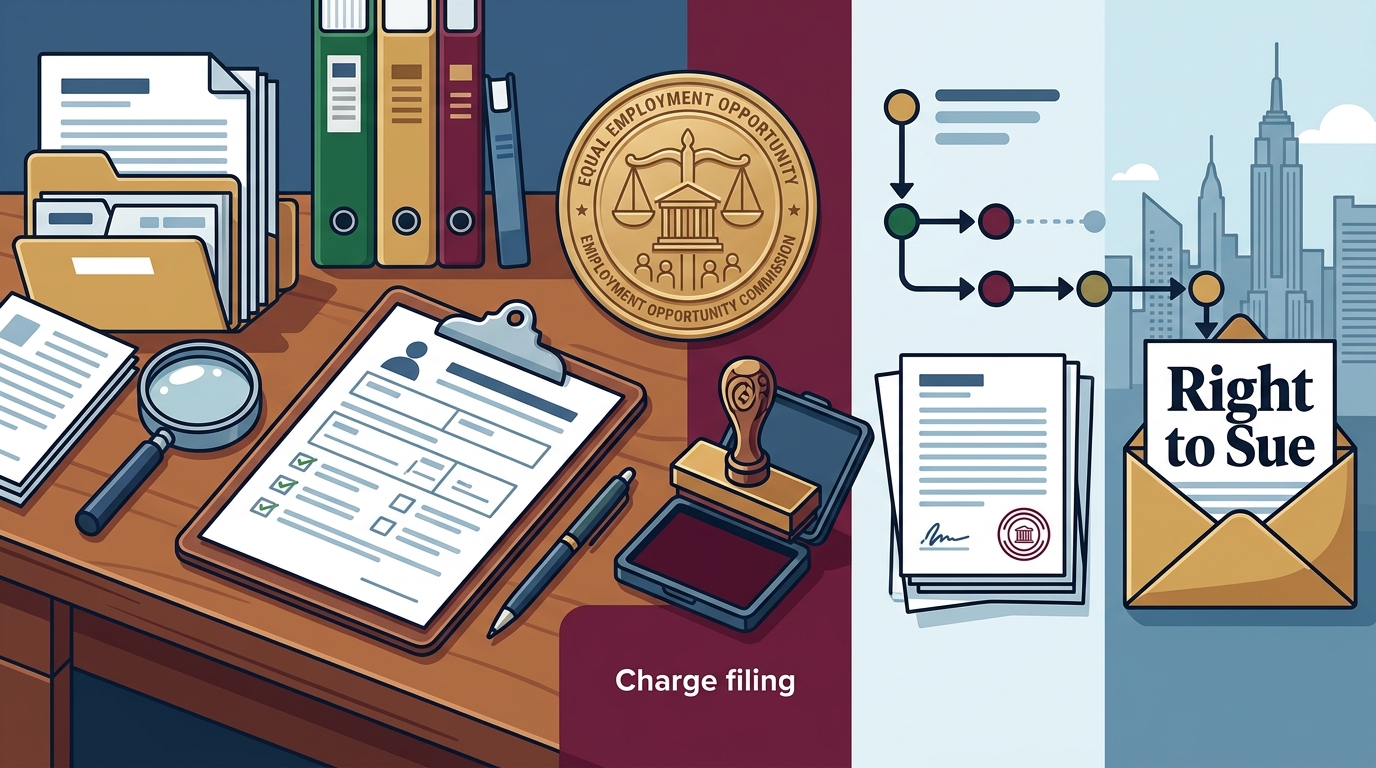
Document Every Incident
Strong documentation is the foundation of any successful discrimination claim. Write down each specific instance of discriminatory treatment, including dates, times, locations, what was said or done, and the names of any witnesses. Keep these notes in a secure, private location outside of your workplace.
Report Internally First
Follow your company's internal reporting procedures. Report the discriminatory conduct to your supervisor or HR department in writing whenever possible. An employer's failure to take corrective action after receiving a complaint strengthens your external claim. Learn more about what to do when your boss makes racist comments.
Consult an Employment Attorney
An experienced racial discrimination attorney can evaluate whether to file under federal, state, or city law and help you avoid costly missteps. Phillips & Associates offers free consultations and charges no attorney fees unless you recover compensation.
Step-by-Step: Filing Your EEOC Charge
Step 1: Contact the EEOC
You can initiate the process online through the EEOC's public portal, by visiting a local EEOC office, or by calling 1-800-669-4000. The New York District Office is located at 33 Whitehall Street in Lower Manhattan.
Step 2: File Within the Deadline
You must file your EEOC charge within 180 days of the discriminatory act. In states like New York that have a Fair Employment Practices Agency (FEPA), the deadline extends to 300 days. Missing this deadline can permanently bar your federal claim.
Step 3: Complete the Charge Form
The EEOC will help you complete the formal Charge of Discrimination. The charge must include a statement describing what happened, identification of the employer, and the basis for your claim (in this case, race). When you file with the EEOC, it can automatically cross-file with the relevant state or local agency to protect your rights under all applicable laws.
What Happens After You File
Once your charge is filed, the EEOC notifies your employer. The agency then investigates, which may include requesting documents, interviewing witnesses, and even visiting your workplace. The EEOC investigation process can range from a cursory review to a thorough inquiry depending on the complexity of the case.
The EEOC may also offer mediation. Mediation is a voluntary, informal process in which a neutral third party helps the employer and employee reach a resolution without a full investigation. If mediation fails or is declined, the investigation proceeds.
According to one analysis, the average EEOC investigation lasts approximately 10 months. During this time, your employer is prohibited from retaliating against you. Learn more about protections against workplace retaliation in New York.
Understanding the Right to Sue Letter
A Right to Sue letter is a notice from the EEOC that clears the path for you to file a lawsuit in federal court. You will receive this letter under one of two circumstances: the EEOC found reasonable cause but could not reach a settlement through conciliation, or the EEOC dismissed the charge.
Critically, once you receive a Right to Sue letter, you have only 90 days to file a lawsuit. This deadline is strict and rarely extended. Even if the EEOC dismissed your charge, you can still pursue a successful lawsuit; the dismissal simply opens the courthouse doors. Read more about what to do after receiving a Right to Sue from the EEOC.
Key Takeaways
- An EEOC charge is a required step before filing a federal racial discrimination lawsuit under Title VII.
- You must file within 180 days (or 300 days in New York) of the discriminatory act.
- New York State and City laws cover employers with as few as four employees and offer broader protections than federal law.
- Document every incident with dates, details, and witness names before filing.
- The EEOC investigation can include mediation, witness interviews, and site visits.
- After receiving a Right to Sue letter, you have exactly 90 days to file a lawsuit in federal court.
- An employment attorney can file the charge on your behalf and protect your interests throughout the process.
Frequently Asked Questions
What qualifies as racial discrimination in the workplace?
Racial discrimination is when an employer treats an employee or job applicant unfavorably because of their race or characteristics associated with a particular race. It includes adverse actions like termination, failure to promote, unequal pay, and hostile work environment harassment such as racial slurs or displaying racially offensive symbols.
Can I file an EEOC charge without an attorney?
Yes. The EEOC allows individuals to file charges on their own. However, an attorney can present your claims more effectively, navigate bureaucratic procedures, and ensure deadlines are met. Phillips & Associates provides free consultations to help you evaluate your options.
How long does the EEOC investigation take?
The average EEOC investigation takes about 10 months, though timelines vary depending on case complexity and agency workload. During this period, you may be asked to provide additional documentation or participate in mediation.
What is the filing deadline for an EEOC charge in New York?
In New York, because the state has a Fair Employment Practices Agency, the federal filing deadline extends from 180 days to 300 days from the date of the discriminatory act. State and city filings have their own deadlines, generally allowing up to three years.
Can my employer retaliate against me for filing an EEOC charge?
No. Federal, state, and local laws all prohibit retaliation against employees who file discrimination charges. Retaliation can include termination, demotion, pay cuts, schedule changes, or any adverse action taken because you exercised your legal rights.
What happens if the EEOC dismisses my charge?
A dismissal does not mean your claim lacks merit. It means the EEOC chose not to pursue litigation on its own. You will receive a Dismissal and Notice of Rights, which gives you 90 days to file a private lawsuit in federal court.
Do I need to file with the EEOC if I want to sue under New York law?
Not necessarily. If you plan to file only under the New York State Human Rights Law or the New York City Human Rights Law, you can go directly to state court or file with the appropriate city or state agency. Filing with the EEOC is required only for federal Title VII claims.
How much does it cost to file an EEOC charge?
There is no fee to file a charge of discrimination with the EEOC. Additionally, Phillips & Associates works on a contingency fee basis, meaning you pay no attorney fees unless we recover compensation for you.
Get Legal Help Today
If you are experiencing racial discrimination at work, do not wait until deadlines expire. The New York City employment discrimination attorneys at Phillips & Associates have recovered over $300 million for victims of workplace discrimination and harassment. Call (866) 229-9441 or contact us online for a free, confidential consultation. There is no attorney fee unless we win your case.