

How to File an EEOC Charge for Racial Discrimination in the Workplace
If you have experienced racial discrimination at work, filing a charge with the Equal Employment Opportunity Commission (EEOC) is often the critical first step toward justice. The EEOC is the federal agency that administers claims arising out of federal anti-discrimination laws, including those that prohibit harassment and discrimination on the basis of race. In fiscal year 2024, the EEOC received 88,531 new charges of discrimination and secured nearly $700 million for victims. Understanding the filing process, deadlines, and your legal options in New York can make the difference between a successful claim and a missed opportunity.
What Is an EEOC Charge of Discrimination?
An EEOC charge of discrimination is a formal complaint filed with the Equal Employment Opportunity Commission alleging that an employer has engaged in unlawful employment discrimination. A charge is not a lawsuit. It is an administrative filing that triggers a federal investigation into the employer's conduct.
For claims brought under Title VII of the Civil Rights Act of 1964, filing an EEOC charge is a mandatory prerequisite before you can bring a lawsuit in federal court. As the Phillips & Associates EEOC practice page explains, an experienced attorney can help portray your claims in the best light and cut through bureaucratic red tape throughout the process.
Federal, State, and Local Laws That Protect You
Workers in New York benefit from three overlapping layers of anti-discrimination protection. Understanding each layer helps you and your attorney decide where to file.
Title VII of the Civil Rights Act of 1964
Title VII prohibits discrimination on the basis of race, color, sex, religion, and national origin. It applies to employers with 15 or more employees. Under Title VII, workplace race discrimination occurs when an employer treats a job applicant or employee unfavorably due to their race or attributes associated with a particular race.
New York State and City Human Rights Laws
The New York State Human Rights Law (NYSHRL) and the New York City Human Rights Law (NYCHRL) also prohibit racial harassment and discrimination. These laws apply to employers with as few as four employees, making them more expansive than federal law. Employees in New York City who experience racial discrimination at work often have stronger protections under these local statutes.
| Law | Minimum Employer Size | Filing Deadline | Filing Agency |
|---|---|---|---|
| Title VII (Federal) | 15 employees | 180 days (or 300 days in NY) | EEOC |
| NYSHRL (State) | 4 employees | 3 years | NYS Division of Human Rights |
| NYCHRL (City) | 4 employees | 3 years | NYC Commission on Human Rights |
Steps to Take Before Filing Your EEOC Charge
Document Everything
Write down each specific instance of discrimination, including the time, place, and nature of every incident. Keep your notes in a safe location others cannot access. As Phillips & Associates advises, a detailed account will be invaluable if the perpetrator denies the behavior occurred.
Report Internally When Possible
Use your company's internal complaint process, including HR and compliance departments. Internal complaints create a documented record and may strengthen your case later.
Consult a Racial Discrimination Lawyer
Before filing, consult an attorney who can evaluate whether to proceed under federal, state, or local law. In many cases, an employment lawyer can identify the strongest legal path and ensure you meet all deadlines.
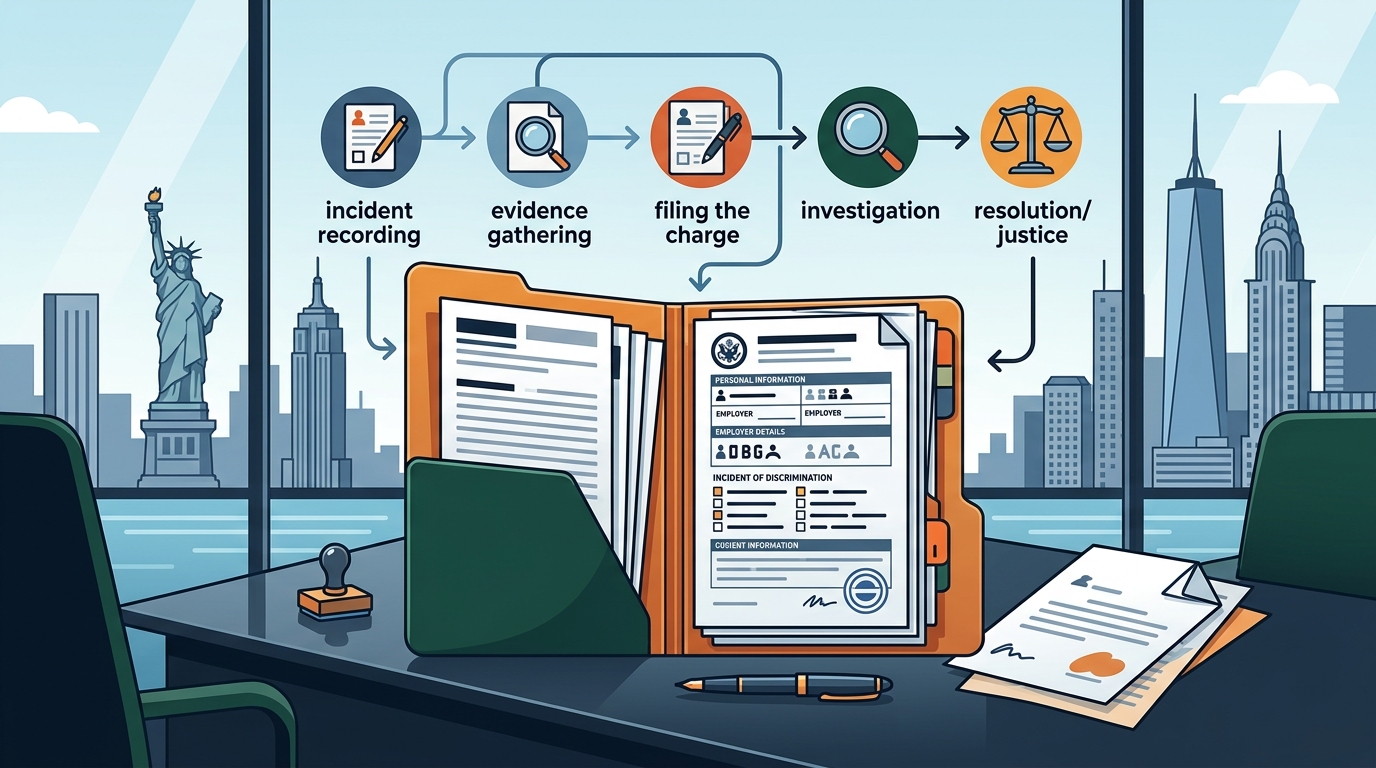
How to File Your EEOC Charge: Step by Step
According to the EEOC's official guidance, charges may be filed in person, by mail, or by telephone by contacting the nearest EEOC office. You can also submit an inquiry online through the EEOC Public Portal.
- Contact the EEOC. Visit the New York District Office at 33 Whitehall Street in Manhattan, call 1-800-669-4000, or start the process online at the EEOC Public Portal.
- Complete an intake questionnaire. Provide basic information about yourself, your employer, and the alleged discrimination.
- Draft the charge. The EEOC will help you prepare a formal Charge of Discrimination. An attorney can also file the charge on your behalf.
- Sign and submit. The charge must be signed under oath or affirmation. The EEOC will then notify your employer, typically within 10 days.
Your attorney can file the charge on your behalf, which ensures accuracy and completeness from the outset.
Critical Filing Deadlines in New York
Timing is essential. Under Title VII, you must file with the EEOC within 180 days of the discriminatory act. However, because New York has its own anti-discrimination agencies, the deadline extends to 300 days for most New York workers. Missing this window can permanently bar your federal claim.
Under New York State law, the statute of limitations was recently expanded to three years for NYSHRL claims. The NYCHRL similarly allows three years to file. It is best to consult an attorney as early as possible to preserve all of your options.
What Happens After You File
Once you file, the EEOC will investigate the alleged discrimination and notify your employer of the charge. The investigation may include interviews, document review, and site visits. The EEOC also offers a mediation program as an alternative resolution method if both parties agree.
If the EEOC finds reasonable cause to believe discrimination occurred, it will attempt to resolve the matter through conciliation. If conciliation fails, the EEOC may file a lawsuit on your behalf or issue a Right to Sue letter. A Right to Sue letter is a formal notice that clears the way for you to file your own lawsuit in federal court within 90 days. Even a dismissal of your EEOC charge does not mean your case lacks merit; it simply opens the courthouse doors.
Retaliation Protections for Employees Who File
Retaliation is an adverse action taken by an employer against an employee because of the employee's participation in a protected activity, such as filing an EEOC complaint. Retaliation remains one of the most common complaints filed with the EEOC, and it is illegal under federal, state, and city law.
If you are terminated, demoted, or subjected to hostile treatment after filing your charge, you may have a separate workplace retaliation claim. Phillips & Associates has recovered over $300 million for victims of harassment, discrimination, and retaliation, and the firm represents workers who face consequences for standing up against race hatred in the workplace.
Key Takeaways
- Filing an EEOC charge is a required step before bringing a federal racial discrimination lawsuit under Title VII.
- New York workers typically have 300 days from the discriminatory act to file with the EEOC.
- New York State and City human rights laws offer broader protections than federal law, covering employers with as few as four employees.
- Document every incident of discrimination with dates, locations, and details before filing.
- The EEOC investigation may result in mediation, conciliation, a lawsuit by the EEOC, or a Right to Sue letter.
- Retaliation for filing an EEOC charge is illegal, and you can pursue a separate claim if your employer punishes you.
- Consulting a racial discrimination attorney early preserves your rights and strengthens your case.
Frequently Asked Questions
What qualifies as racial discrimination under Title VII?
Racial discrimination under Title VII occurs when an employer treats a job applicant or employee unfavorably because of their race, or because of characteristics associated with a particular race. This includes hiring, firing, promotions, pay, and creating a hostile work environment.
Can I file an EEOC charge without a lawyer?
Yes. The EEOC allows individuals to file a charge on their own. However, having an experienced employment discrimination attorney increases your chances of presenting a thorough and compelling charge from the start.
How long does an EEOC investigation take?
EEOC investigations average approximately 10 months. The timeline depends on the complexity of the case, the volume of evidence, and whether the parties agree to mediation.
What is a Right to Sue letter?
A Right to Sue letter is a notice from the EEOC informing you that you may file a lawsuit in federal court. You must file your lawsuit within 90 days of receiving this letter. It is issued after the EEOC concludes its investigation or upon your request after 180 days.
Can my employer fire me for filing an EEOC charge?
No. Firing an employee for filing an EEOC complaint is illegal retaliation under federal, state, and local law. If this happens, you can pursue a separate retaliation claim in addition to your original discrimination charge.
Should I file under federal law or New York law?
It depends on your situation. Federal law requires your employer to have at least 15 employees, while New York State and City laws cover employers with four or more. An attorney can help you determine which law offers the strongest protections and remedies for your case.
What damages can I recover in a racial discrimination case?
Depending on the law under which you file, you may recover compensatory damages, punitive damages, back pay, emotional distress damages, and attorneys' fees. Courts may also order reinstatement or policy changes at your workplace.
What is the EEOC's New York District Office address?
The EEOC New York District Office is located at 33 Whitehall Street, 5th Floor, New York, NY 10004. You can also reach the EEOC by calling 1-800-669-4000.
Speak With a New York Racial Discrimination Lawyer
If you have experienced racial discrimination at work, do not wait until deadlines expire. The employment discrimination attorneys at Phillips & Associates have recovered over $300 million for victims of workplace discrimination and harassment. The firm represents workers across Manhattan, Brooklyn, Queens, the Bronx, Staten Island, and surrounding counties.
Call (866) 229-9441 today for a free consultation, or contact Phillips & Associates online. There is no attorney fee unless you recover compensation.