
Being pregnant should never cost you your career. Yet pregnancy discrimination remains a persistent problem in New York City workplaces, affecting thousands of workers every year. If your employer fired you, demoted you, denied you a promotion, or refused to accommodate your pregnancy-related needs, you may have grounds to file a lawsuit. New York City employees benefit from some of the strongest protections in the country under federal, state, and city law. This guide walks you through every step of bringing a pregnancy discrimination claim in NYC, from documenting the misconduct to filing with the right agency and pursuing your case in court.
What Is Pregnancy Discrimination?
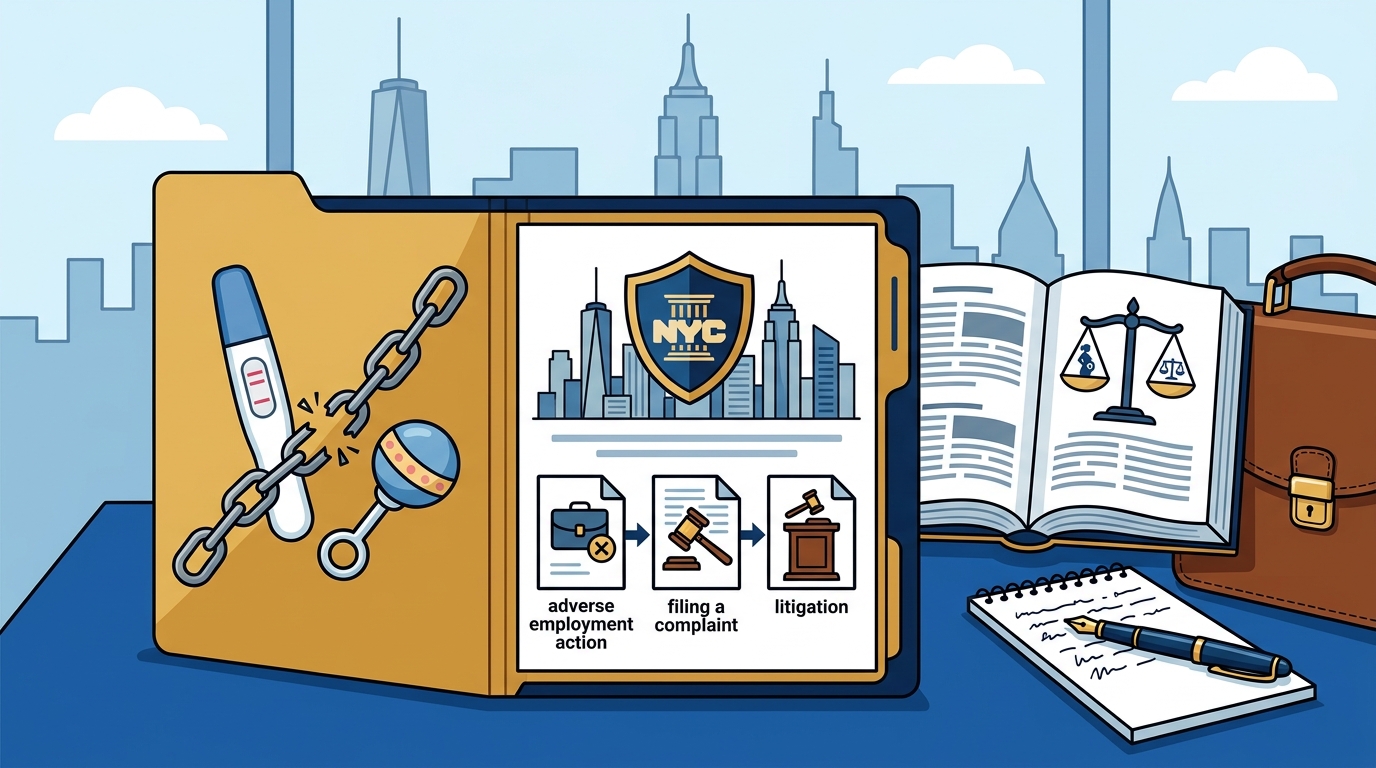
Pregnancy discrimination is when an employer takes an adverse employment action against a worker because of pregnancy, childbirth, or a related medical condition. Adverse actions include termination, demotion, refusal to hire, denial of promotions, pay cuts, and failure to provide reasonable accommodations.
As the U.S. Equal Employment Opportunity Commission (EEOC) explains, employers cannot treat pregnant workers less favorably than other employees who are similar in their ability or inability to work. This protection extends to every stage of employment, from job interviews to post-maternity-leave decisions.
Laws That Protect Pregnant Workers in NYC
New York City employees are shielded by three overlapping layers of legal protection. Understanding each one is critical to building a strong case.
Federal: The Pregnancy Discrimination Act (PDA)
The Pregnancy Discrimination Act is a federal law that amended Title VII of the Civil Rights Act of 1964. It prohibits pregnancy discrimination in workplaces with 15 or more employees. Under the PDA, employers must treat pregnancy-related conditions like any other temporary disability.
State: The New York State Human Rights Law (NYSHRL)
The NYSHRL provides broader coverage than federal law. It applies to employers with four or more employees and requires reasonable accommodations for pregnancy-related conditions unless they impose an undue hardship. Importantly, the NYSHRL treats pregnancy discrimination as a form of sex discrimination and imposes no cap on compensatory or punitive damages.
City: The NYC Human Rights Law (NYCHRL)
The New York City Human Rights Law is the most protective of the three. According to the NYC Commission on Human Rights, the NYCHRL requires employers to provide reasonable accommodations for pregnancy, childbirth, or related medical conditions regardless of whether other employees receive similar accommodations. The city law also covers independent contractors as of January 2020.
| Feature | Federal (PDA/Title VII) | NY State (NYSHRL) | NYC (NYCHRL) |
|---|---|---|---|
| Employer size threshold | 15+ employees | 4+ employees | 4+ employees |
| Accommodation requirement | Must match other disability accommodations | Affirmative duty to accommodate | Affirmative duty; broadest standard |
| Filing deadline | 300 days (EEOC) | 3 years (NYSDHR) | 1 year (city) or 3 years (court) |
| Damages caps | Capped by employer size | No caps | No caps |
| Covers independent contractors | No | Limited | Yes (since Jan. 2020) |
Recognizing Signs of Pregnancy Discrimination
Discrimination is not always overt. Employers rarely say, "We are firing you because you are pregnant." Instead, look for patterns such as being excluded from training that colleagues receive, losing a promotion shortly after announcing your pregnancy, or facing negative performance reviews that contradict your track record.
Other warning signs include being pressured to take unpaid leave earlier than medically necessary, receiving comments questioning your commitment, or being denied reasonable accommodations like additional breaks, a modified schedule, or the ability to sit during shifts. If your employer provides similar accommodations to other temporarily disabled workers but refuses them for your pregnancy, that discrepancy is strong evidence of discrimination.
Steps to Sue Your Employer for Pregnancy Discrimination
Step 1: Document Everything
Start building your evidence immediately. Save emails, text messages, performance reviews, and any written communications related to your pregnancy or your treatment at work. Keep a personal log of discriminatory comments, dates, and the names of witnesses. This documentation becomes the foundation of your case.
Step 2: Report Internally
Notify your HR department or use your company's internal complaint process. While not legally required in every situation, an internal complaint creates a paper trail showing your employer was on notice. It also triggers anti-retaliation protections under all applicable laws.
Step 3: File a Complaint With the Appropriate Agency
For federal claims, you must file a charge with the EEOC before filing a lawsuit in court. For state claims, you may file with the New York State Division of Human Rights (NYSDHR). For city claims, you can file with the NYC Commission on Human Rights or go directly to court. An experienced attorney can help you choose the right path.
A charge of discrimination is a formal document describing the nature of the misconduct, the protected characteristic involved, and the adverse actions you experienced. Once filed, the agency investigates, and may offer mediation. If the matter is not resolved, the EEOC issues a Right to Sue letter, which allows you to proceed in federal court.
Step 4: Consult an Employment Discrimination Attorney
Pregnancy discrimination cases involve complex legal standards, strict deadlines, and often aggressive defense tactics. An experienced pregnancy discrimination attorney can evaluate your claim, identify every applicable law, and maximize your chances of a favorable outcome. Phillips & Associates offers free consultations and works on a contingency basis, so you pay nothing unless you recover compensation.
Filing Deadlines You Cannot Miss
Statutes of limitations are strict. Missing a deadline can permanently bar your claim.
- EEOC (federal): You generally have 300 days from the discriminatory act to file a charge.
- NYSDHR (state): You have three years to file a complaint under the NYSHRL.
- NYC Commission on Human Rights: You have one year from the most recent act of discrimination to file a complaint with the Commission, or three years if filing directly in court.
Because these windows overlap and interact, consulting a lawyer early is essential to preserving all of your options.
Damages You Can Recover
A successful pregnancy discrimination lawsuit can yield several forms of compensation. Compensatory damages cover lost wages, lost benefits, and emotional distress. Punitive damages may be awarded when the employer's conduct was especially egregious. Courts may also order reinstatement to your former position, back pay, and front pay for future lost earnings.
Under the NYSHRL and NYCHRL, there are no caps on compensatory or punitive damages. Additionally, prevailing plaintiffs can recover attorney's fees, meaning you are not burdened by legal costs. In one notable case, a jury awarded over $185 million in damages to a worker whose employer demoted and terminated her after she gave birth, demonstrating the scale of potential accountability employers can face.
Key Takeaways
- Pregnancy discrimination is illegal under federal, New York State, and New York City law.
- NYC employees enjoy the broadest protections, including an affirmative right to reasonable accommodations.
- Document every incident of discriminatory treatment as soon as it occurs.
- You must file with the EEOC within 300 days for federal claims; state law allows up to three years.
- Employers cannot retaliate against you for requesting accommodations or filing a discrimination complaint.
- There are no damage caps under the NYSHRL or NYCHRL, which can lead to significant recoveries.
- An experienced employment attorney can help you navigate the process and protect your rights at every stage.
Frequently Asked Questions
Can I sue my employer if I was fired while pregnant?
Yes. If your employer terminated you because of your pregnancy rather than for a legitimate business reason, you may have a valid claim under the Pregnancy Discrimination Act, the NYSHRL, or the NYCHRL. An attorney can help you determine whether the timing and circumstances suggest discriminatory intent.
Do I need to file with the EEOC before suing in court?
For federal claims under Title VII, yes. You must file a charge with the EEOC and receive a Right to Sue letter before filing a federal lawsuit. However, under New York State and City law, you may file directly in court without going through an administrative agency first.
What qualifies as a reasonable accommodation for pregnancy?
A reasonable accommodation is any adjustment to the workplace that allows you to perform your job. Examples include additional bathroom breaks, a modified work schedule, permission to sit instead of stand, light-duty assignments, and time off for prenatal appointments. Your employer must provide these unless doing so creates an undue hardship.
How long do I have to file a pregnancy discrimination claim in NYC?
Under federal law, you have 300 days to file with the EEOC. Under the NYSHRL, you have three years to file a complaint. Under the NYCHRL, you generally have one year to file with the NYC Commission on Human Rights or three years to file in court.
Can my employer retaliate against me for filing a complaint?
No. Retaliation is illegal under every applicable law. Your employer cannot fire, demote, harass, or otherwise punish you for filing a discrimination complaint, requesting an accommodation, or participating in an investigation. If retaliation occurs, it becomes an additional legal claim.
What if my employer says my termination was for poor performance?
Employers frequently offer pretextual reasons for adverse actions. If the timing of your termination closely follows your pregnancy announcement or accommodation request, or if your performance reviews were positive before the pregnancy, an attorney can argue that the stated reason is pretext for discrimination.
How much does it cost to hire a pregnancy discrimination lawyer?
Many employment discrimination firms, including Phillips & Associates, work on a contingency fee basis. This means you pay no upfront fees and owe nothing unless your case results in a settlement or verdict in your favor.
Does pregnancy discrimination law protect me during the hiring process?
Yes. Under federal, state, and city law, an employer cannot refuse to hire you because of your pregnancy. Questions about pregnancy or family plans during a job interview are evidence of discriminatory intent, and you are not required to disclose your pregnancy to a prospective employer.
Protect Your Rights Today
If you believe you have experienced pregnancy discrimination in a New York City workplace, do not wait. Strict filing deadlines could limit your options. Contact Phillips & Associates at (866) 229-9441 for a free, confidential consultation. Our experienced employment discrimination attorneys have recovered over $300 million for victims of workplace discrimination and harassment, and we do not collect any fees unless we win your case.